
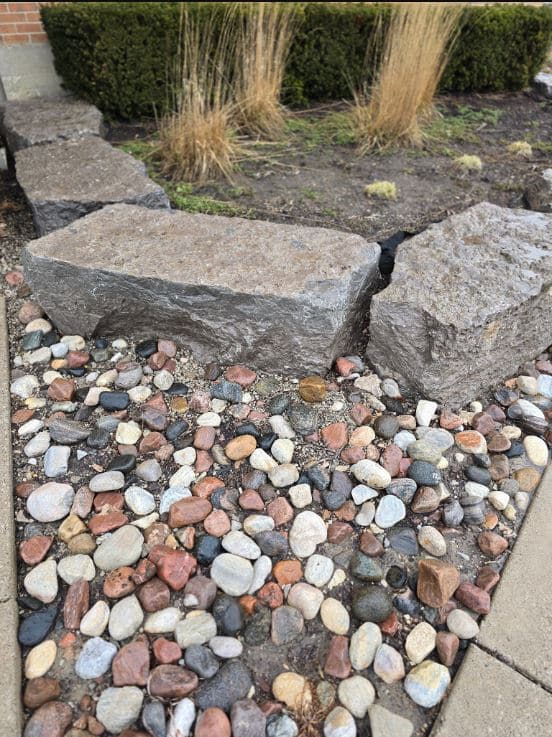
People searching for types of landscaping rocks usually want a map, not a geology lecture: what sits underfoot, what fills a bed, what stacks, and what is only for looks. This guide groups the stone JBS Express McKinney actually stocks so you can match the material to the job.
If you already know you need loose gravel for a path or bed, use the landscaping gravel guide. Stay here if you are still deciding among flagstone, river rock, gravel, boulders, and chopped stone.
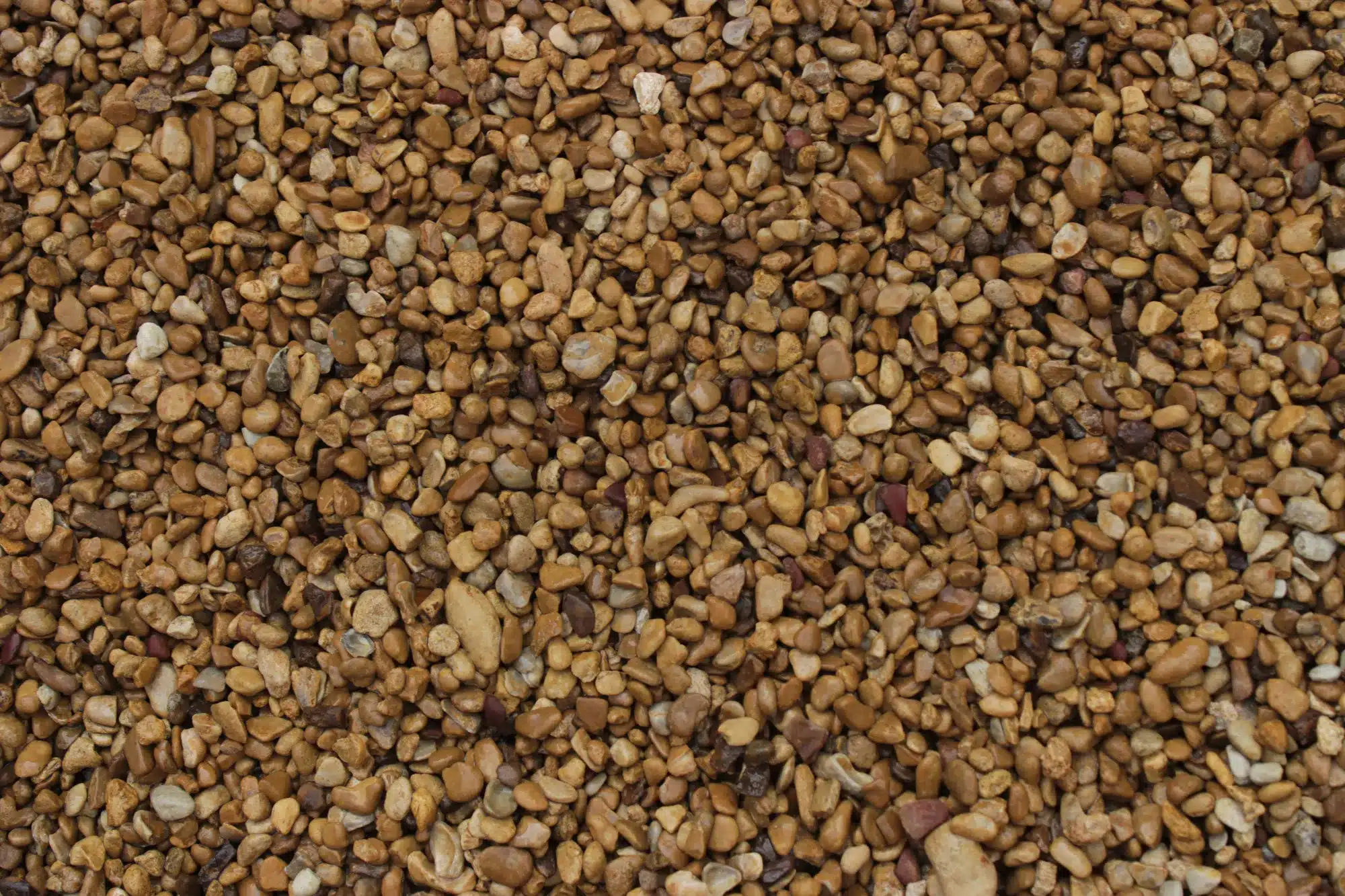
Table of Contents
- Quick Answer
- Flagstone and Slabs
- River Rock and Pebbles
- Landscape Gravel
- Boulders
- Chopped Stone
- How to Choose
- FAQs
Quick Answer
The common types of landscaping rocks break into five jobs:
- Walking surfaces — flagstone, patio slabs, and some pavers.
- Loose groundcover — gravel, decomposed granite, and pebbles.
- Drainage and dry creeks — river rock, rip rap, and larger cobble.
- Structure — chopped stone and stacked walls.
- Accents — boulders you place, not dump.
Pick the job first. Color comes second. A beautiful boulder in a driveway is a trip hazard; pretty pea gravel on a steep slope will migrate.
Flagstone and Slabs
Flagstone is the flat stone for patios, landings, and stepping paths. Thickness and size matter more than the marketing name. Laydown slabs need a prepared base; they will rock on clay if you skip compaction. Oklahoma and Austin White slabs are typical regional choices. Read what flagstone is before you order a patio SKU for a wall.
Concrete pavers are not “rock,” but they show up in the same shopping trip. If you want a uniform grid instead of irregular stone, look at the paver category and plan a sand bedding layer — our cushion sand guide covers that layer.
River Rock and Pebbles
River rock is rounded. It does not lock like crushed gravel. That is why it shines in dry creek beds, around downspouts, and in planting beds where you want water to move and the surface to look natural. It is a poor choice as the only layer on a driveway that sees daily traffic.
Pebbles (including Mexican beach pebbles and polished mixes) are the smaller, more decorative cousin. They are for bowls, small beds, and accent strips, not structural fill. If you are lining a drainage swale, start with the river rock explainer and the dry creek bed landscaping walkthrough rather than buying pebble bags and hoping.
Landscape Gravel
Gravel is the workhorse: crushed or mixed stone in sizes for paths, beds, French drains, and some drives. Types of gravel for landscaping usually means size plus color — pea gravel, crushed granite, Tejas, decomposed granite — not a different mineral in every pile.
Use angular crushed gravel where you need the pieces to knit. Use rounded or decorative gravel where the look matters more than a locked crust. The dedicated landscape gravel article and the gravels catalog are the next clicks once you know you want loose stone instead of slabs.
Driveways are their own problem. Rounded decorative rock that looks good in a photo will rut. See what type of gravel works for driveways before you copy a backyard bed mix onto the parking pad.
Boulders
Boulders are placed, not spread. A few well-set stones at a dry-creek bend or bed corner do more than a dump of “accent rock” with no scale. They need a slight bury so they look like they grew there, and they need equipment or a lot of hands. Browse boulders and the boulder guide if the project is focal stone, not fill.
Chopped Stone
Chopped stone is limestone cut to stack. It is the type of landscaping rock you want for low walls, planter faces, and thick borders — not for a walking surface. Austin White, Granbury, Milsap, and Oklahoma chops are the usual color conversation at the yard. The chopped stone guide compares those options and explains why they ride a flatbed instead of a dump truck.
How to Choose
Walk the project with four questions:
- Do people walk or drive on it? If yes, you need a surface stone or angular gravel, plus a base.
- Does water concentrate here? River rock, rip rap, or a designed creek — not a thin decorative pebble.
- Does it need to hold soil? Chopped stone or a proper wall, not a single row of cobble on topsoil.
- Is it only visual? Then color and size at the pile matter, and you can choose more freely.
North Texas clay swells and shrinks. Whatever type of landscaping rock you pick, the base and edge usually decide whether it still looks intentional after the first summer. Landscape fabric can help in beds; it is not magic under a driveway.
A practical way to shop the yard: take two photos (the whole area and a close-up of the soil), a rough length and width, and one sentence about traffic — walking, mowing, cars, or just looking. Staff can then point you to a pile instead of walking every category. If two types could work, buy a small test amount or look at both in sun before you commit a dump truck.
Maintenance differs by type. Gravel beds need an edge and an occasional top-off where mower wheels kick stone. River rock creeks need a check after the first big storm so thin spots get another layer. Flagstone needs joints that still drain. Chopped walls need the base to stay dry enough that the first course does not sink. None of that is exotic; it is why the “type” conversation should include who will maintain the surface, not only which photo you liked.
Estimate loose materials with the calculator, then confirm at the yard. Call (469) 972-8818 if you can send a photo — matching a type is faster than describing “that gray rock” over the phone.
FAQs
What are the main types of landscaping rocks?
Flagstone and slabs for walking, gravel and decomposed granite for loose surfaces, river rock for drainage looks, chopped stone for stacking, and boulders for accents.
What is the difference between landscaping rocks and gravel?
Gravel is one type of landscaping rock: small, loose pieces. “Rocks” also includes slabs, chops, cobble, and boulders.
Which stone is lowest maintenance?
Inorganic rock does not rot like mulch. You still get weeds in dust, migration on slopes, and splash on light-colored stone. Edging and a real base cut the maintenance more than the mineral name does.
Can I mix types in one yard?
Yes, if each type has a job. A flagstone patio, gravel path, and river-rock creek can look planned. Three decorative gravels in one bed usually looks like leftovers.
Where do I buy these materials?
JBS Express stocks them in McKinney for pickup or delivery. Start in the catalog or contact the yard.
Do I need different rock in front vs back?
Only if the jobs differ. A front bed that must stay neat next to a sidewalk can use a smaller, darker gravel with a hard edge. A back drainage swale can use larger river rock. Using one gravel everywhere is fine when the traffic is the same; mixing five types on one small lot is how yards look unfinished.
What should I photograph before I come in?
The whole project, the soil or existing rock, any slope, and the truck path. Include something for scale (a shovel or a door). That is enough to short-list types of landscaping rocks without walking every pile first.
Texas A&M AgriLife’s Earth-Kind program is a useful independent check on plants and water once the hardscape type is chosen.
Need a load, not another article? Call (469) 972-8818 or request a quote.