
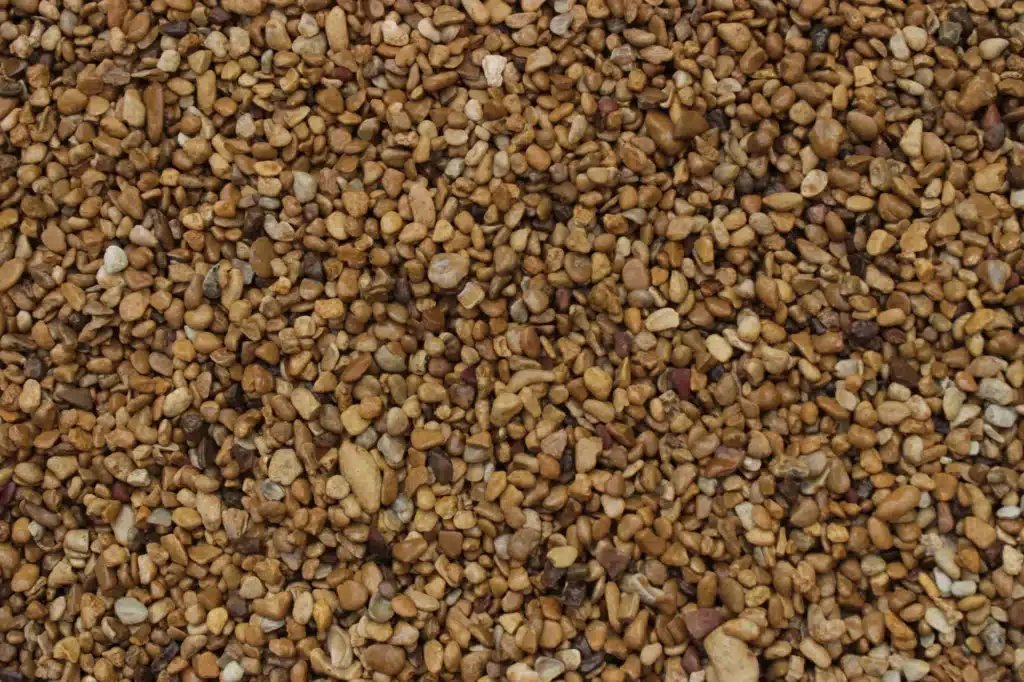
Pea gravel vs decomposed granite is one of the most common product decisions at a landscape materials yard. Both show up in path and patio plans, both arrive by the cubic yard, and both look “natural” from the curb. Spend five minutes walking on each surface after a rain, though, and the difference is obvious. This guide helps you choose before you schedule pickup or dump truck delivery.
JBS Express stocks landscape gravel — including pea-size options — and decomposed granite at our McKinney yard. We sell materials; we do not install. Matching the product to how you will use the space matters more than picking the trendiest color photo online.
Quick comparison
- Pea gravel — small, rounded stones that stay loose, drain quickly between pieces, and shift underfoot or under tires.
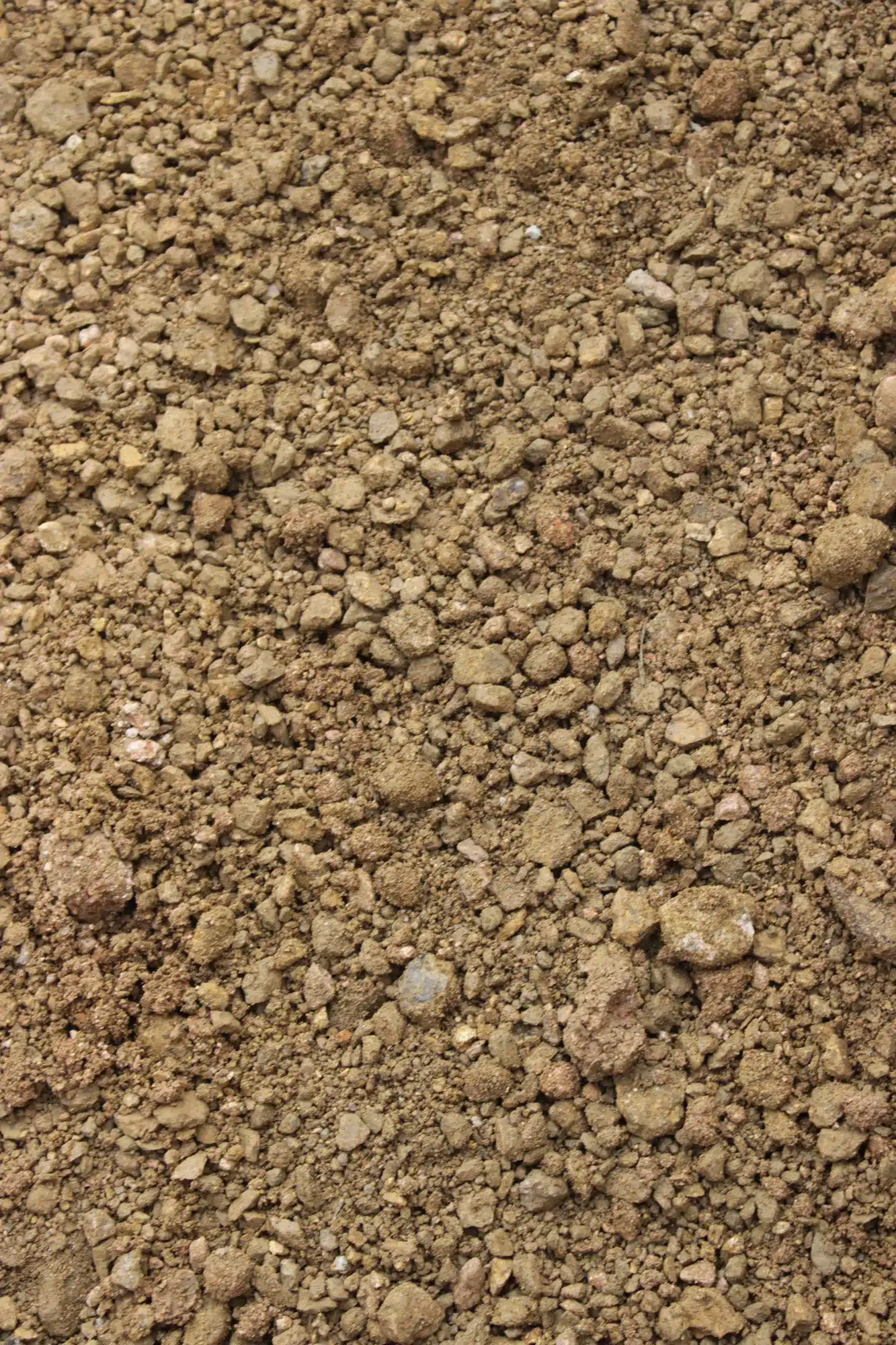
- Decomposed granite (DG) — fine granite particles (sometimes with small chips) that can compact into a firmer path or patio pad when installed in lifts.
- Choose pea gravel for decorative beds, tree rings, and loose surfaces where a soft rattle underfoot is fine.
- Choose DG for walking paths and informal pads where you want a more stable, broomable finish.
What pea gravel does well
Pea gravel is rounded. That shape is why it feels comfortable in planting beds and why it rolls when you walk or drive on it. Water moves through the voids easily, which helps in tree rings and borders where mud splash is the enemy.
It is a weak choice as the only driving surface for daily car traffic. Round stone migrates and never locks like angular driveway gravel. If you need a drive, read our landscape gravel guide and driveway gravel guide instead of forcing pea gravel into that job.
Expect maintenance. Leaves and fines settle in the voids. A leaf blower and occasional raking keep beds looking intentional. Depth in decorative beds is often about two to three inches once settled — thinner and you see dirt; thicker and you waste material.
What decomposed granite does well
Decomposed granite is granite that has weathered into sand- and silt-sized particles. Placed in lifts and compacted, it can form a firm trail-like surface that still looks natural. Some higher-traffic paths use stabilizers — that is an installer decision, not something the truck automatically includes.
DG shines on side-yard walks, garden paths, and informal patio pads. It is not crushed granite base rock under pavers, and it is not cushion sand. If your plan calls for a paver patio, order base gravel and cushion sand as specified — do not substitute DG and hope for the same result.
Paths: how the choice feels day to day
Pea gravel paths sound and feel loose. Wheelbarrows and bike tires complain. Kids may love it; anyone pulling a trash bin weekly may not. DG paths feel closer to a compacted park trail when prep and depth are right. Both need edges — steel, stone, or concrete — so material does not migrate into turf.
Grade first. Neither product fixes a low spot that floods every storm. For DG ground prep, use the steps on our decomposed granite guide: strip organics, grade for drainage, compact the subgrade, place in lifts, then edge.
Patios and seating
Café chairs on loose pea gravel rock and tip. Compacted DG can work for informal seating if the pad is deep enough and well compacted. For permanent furniture that must stay level through seasons, many homeowners move to flagstone or concrete pavers on a proper base. Use pea gravel or DG as the surrounding bed finish, not as a substitute for a true patio system, when furniture stability matters.
North Texas clay, heat, and rain
Clay holds water. Pea gravel lets stormwater move through the stone layer quickly but does not create subsurface drainage by itself. DG can soften or crust if the base stays saturated. Grade away from the foundation. Where you need a French drain, use the open-graded stone your contractor specifies — decorative pea gravel is not automatically a drainage system. Our drainage rock guide covers that intent separately.
Summer sun heats dark rock. Lighter DG and light pea colors stay more comfortable for bare feet than dark gravel, but all stone gets hot. Plan shade and watering for nearby plants either way.
How much to order
Cubic yards = length × width × depth (feet) ÷ 27. Add roughly 10% for irregular edges and compaction loss on DG. Measure twice. Use the material calculator, then confirm with yard staff while looking at the pile. Calling (469) 972-8818 with a sketch beats guessing bag counts at a big-box store.
Pickup vs delivery
A tarp-covered pickup can handle small refreshes. Whole-path jobs and multi-bed packages are faster with dump truck delivery. Tell us gate width, overhead lines, and where the truck can dump cleanly. Both pea gravel and DG ride as loose bulk — not flatbed slab loads.
Ordering checklist
- Decide loose decorative surface vs compacted walking surface.
- Measure square footage and target depth.
- Visit the yard to compare color in daylight.
- Order companions (edging, base stone, cushion sand) on the same ticket when the plan needs them.
- Schedule pickup or delivery and mark the dump spot.
Common project scenarios
Side-yard dog run: pea gravel often drains better than DG for this use, but it tracks indoors on paws. A door mat and sometimes a coarser angular gravel work better when tracking is the main complaint.
Garden path to a shed: DG usually wins because wheelbarrows need a firmer track. Edge both sides so plants do not creep over the surface.
Front-bed refresh: pea gravel often looks cleaner than DG around foundation plants when you want a bright loose finish. Keep rock and mulch in separate zones so the yard does not look undecided.
Kids play corner: pea gravel feels softer for kneeling; confirm depth and suitability. DG dust can bother some kids when dry and windy.
Mistakes to avoid
- Using pea gravel as a driveway wearing course
- Skipping edging and then blaming the product for migration
- Ordering DG without compacting in lifts
- Ignoring grade so water ponds on the path
- Mixing pea gravel and DG in one walking lane
If you are still unsure, visit the yard with photos. Walking the piles answers more questions than another comparison chart.
FAQs
Is pea gravel the same as decomposed granite?
No. Pea gravel is small rounded stone. DG is fine granite that can compact. They can look similar from the street and behave differently underfoot.
Which costs less?
Price follows product and load size. Quote the cubic yards you need instead of assuming one material is always cheaper.
Can I mix them on one path?
Mixing in a single walking lane usually looks muddy and wears poorly. Using DG for the lane and pea gravel in adjacent beds is a cleaner design.
Where do I buy pea gravel or DG near McKinney?
See piles at JBS Express, browse the catalog, or request a quote.
Will DG get muddy?
It can if the base stays wet or fines are excessive. Good grading and compaction reduce that risk; standing water under the path does not.
Next step
Choose based on how the surface needs to feel, then match the pile. Shop gravels, read the DG guide, or call (469) 972-8818 with your square footage.