
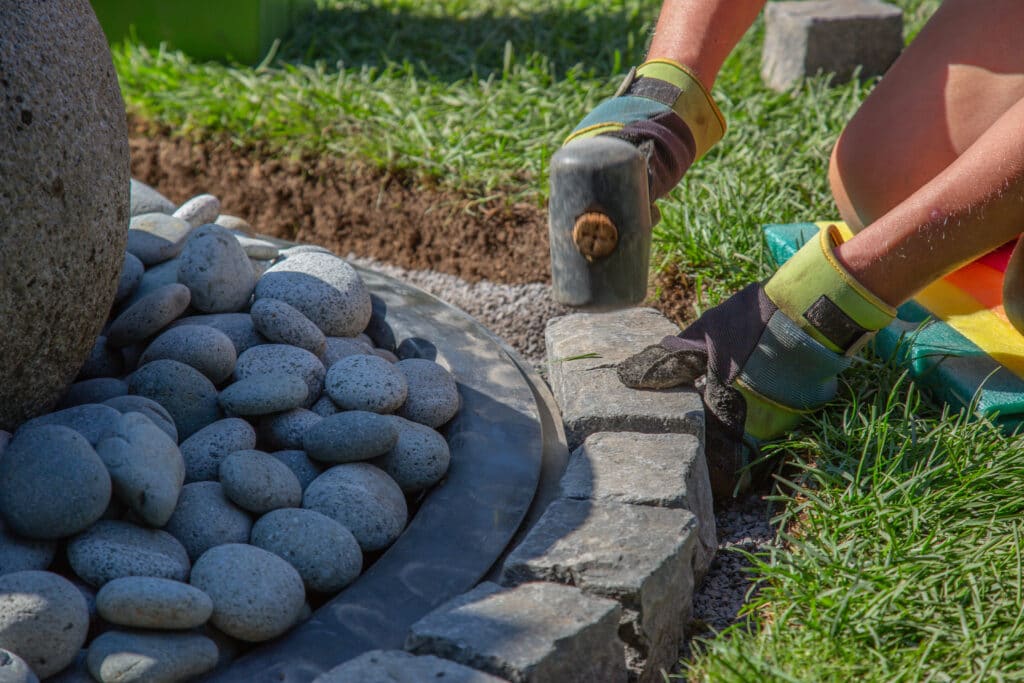
Learning how to install landscape stone edging is one of the easiest ways to make a yard look finished. A stone border keeps mulch in the bed, keeps grass out, and gives your beds a clean line you don’t have to redraw every spring.
The short version: mark the line, dig a trench about 3 inches deep and 6 inches wide, add a compacted base, set the stones level, check drainage, and backfill. Below is the full walkthrough, with a few McKinney-specific notes for clay soil.
Table of Contents
- Why does landscape stone edging matter?
- Is it hard to learn how to install landscape stone edging?
- What do you need to install landscape stone edging?
- How to install landscape stone edging step by step
- How to install landscape stone edging on a curve or slope
- Which edging material should you choose?
- How much edging stone and base do you need?
- What mistakes should you avoid?
- Why buy landscaping stone in McKinney from JBS Express?
- FAQs
Why does landscape stone edging matter?
Edging does more than look good. It stops grass from creeping into flower beds and keeps mulch from spilling onto the lawn. Along walkways, it holds the edge of gravel or soil in place so the path stays defined.
Is it hard to learn how to install landscape stone edging?
Not really. How to install landscape stone edging comes down to three things: a level trench, a firm base, and patience with the first few stones.
A beginner can handle it. You don’t need special equipment, just the right materials and a free weekend.
What do you need to install landscape stone edging?
Gather everything before you dig. It’s a lot easier than stopping halfway to hunt for a mallet.
- Edging stones (natural stone, brick, or pavers)
- Shovel or spade for the trench
- Garden hose or rope to mark curves
- Rubber mallet to seat and level the stones
- Hand tamper to compact the base
- Sand, gravel, or limestone screenings for the base
- Mulch to finish the bed
- Work gloves
How to install landscape stone edging step by step
These six steps cover how to install landscape stone edging in most yards. Before you break ground, call 811. Utility lines can run closer to the surface than you’d expect, and Call 811 is free. Submit your request a few days ahead so lines can be marked.
Step 1: Plan the layout
Lay a garden hose or rope along the line you want. Curves give a softer, more natural look, and straight lines feel crisp and formal. Mark the line with spray paint once it looks right from the street and from the patio.
Step 2: Dig the trench
Dig a trench about 3 inches deep and 6 inches wide. That depth suits a flat edging stone, so go deeper if your stones are taller. Pull out weeds and rocks as you go, then add 1 to 2 inches of sand, gravel, or limestone screenings for a stable base.
Step 3: Set the edging stones
Place each stone in the trench and check that the top is level. Tap it down with a rubber mallet until it sits firm. Take your time on the first few stones, because every stone after them follows that line.
Step 4: Check drainage
Water needs a way out of the bed. McKinney’s clay holds water, so make sure the trench doesn’t trap it behind the stones. If the bed sits low, add gravel under the edging so water can pass instead of pooling.
Step 5: Compact and secure
Backfill and tamp the soil around the stones so the border stays put. If a few stones still wobble, extra sand underneath usually fixes it. Mortar between stones is optional, and it makes sense for formal edges that get a lot of traffic.
Step 6: Finish the bed
Fill any gaps with soil or mulch, then run your hand along the top to check that it’s smooth. A fresh layer of mulch makes the new edge pop. Texas A&M AgriLife’s Earth-Kind landscaping program is a good reference for mulching depth and bed care.
How to install landscape stone edging on a curve or slope
For curves, use the hose as your guide and cut the trench to follow it. Smaller stones follow tight curves better than long, straight ones. Go slowly, then step back and look at the line from a few angles before you backfill.
On a slope, don’t tilt the stones with the ground. Set them level in short runs and step the edging down the hill so each section sits flat. That keeps stones from creeping downhill after the first heavy rain.
If you want a raised or layered look, our guide to how to install decorative rock landscaping pairs well with a stone border.
Which edging material should you choose?
The right edging depends on the look you want and how much traffic the border will see. Here’s how the common options compare.
| Material | Best for | What to know |
|---|---|---|
| Natural stone | Curves and straight runs, a natural look | Long-lasting; color and size vary a little from piece to piece |
| Brick | Straight lawn edging, a formal look | Works best on straight lines; see our landscaping bricks guide |
| Pavers | Walkways and heavier traffic | Uniform size makes leveling easier; see how to lay stone pavers |
| Concrete | Durable, low-maintenance borders | Less natural-looking; harder to adjust once set |
Think about your house, your plants, and how the border meets the lawn before you pick. For a closer look at options in our yard, read our guide to landscape edging stone in McKinney. Browse the full JBS Express catalog to see landscaping stone McKinney homeowners pick for borders.
How much edging stone and base do you need?
Measure the run in feet and divide by the length of one stone. Add about 10 percent for cuts and the occasional chip. For curves, measure along the hose, not the straight line between the ends.
Base material is easy to estimate. A trench 6 inches wide with a 2-inch base needs about 8 cubic feet of material per 100 feet of edging, which is roughly a third of a cubic yard. The material calculator will do the conversion if your bed has several runs.
What mistakes should you avoid?
Most edging problems trace back to the trench. Watch for these:
- Digging too shallow, so stones sit proud and tip over
- Skipping the compacted base
- Forcing curves instead of following the hose layout
- Setting stones at uneven heights
- Ignoring drainage behind the border
If you’re laying stone inside the bed too, read how landscape fabric under river rock works before you put anything down.
Why buy landscaping stone in McKinney from JBS Express?
You can see the stone before you buy it. JBS Express Natural Stone & Landscape Material is at 4011 W University Dr in McKinney, with natural stone, pavers, gravel, and base materials in one place. Our team can walk you through how to install landscape stone edging with the stone you pick.
Whether you’re doing tree rings, straight borders, or curved garden beds, we can deliver by flatbed so pallets of stone land close to the work. Planning a bigger refresh? Our spring landscape materials checklist for McKinney yards covers mulch, topsoil, and stone in one plan.
FAQs
Why should I use stone edging in my garden?
Stone edging keeps a bed tidy. It stops grass from spreading into the bed and holds mulch in place, so you spend less time raking and trimming.
Can I learn how to install landscape stone edging myself?
Yes. It’s a manageable DIY project if you’re comfortable digging and lifting. The key is a level trench and a firm base.
How deep should I dig for stone edging?
Dig a trench about 3 inches deep and 6 inches wide for a standard flat edging stone. Go deeper for taller stones, and add 1 to 2 inches of compacted base under them.
What tools do I need to install stone edging?
You need a shovel, a rubber mallet, a tamper, a garden hose to mark curves, and sand or gravel for the base. Gloves and mulch are useful extras.
Can stone edging be curved?
Yes. Lay a hose along the curve first, then dig the trench to match. Smaller stones follow tight curves more smoothly than long ones.
How to install landscape stone edging on a slope?
Set the stones level in short runs and step them down the slope. Don’t follow the angle of the ground, or the stones can slide after heavy rain.
How to install landscape stone edging around a tree?
Mark a circle with a hose, then dig the trench and set the stones the same way you would for a bed. Keep the ring wide enough that mulch doesn’t touch the trunk, and leave the stones level all the way around.
Should I use landscape fabric with stone edging?
Fabric under gravel or river rock inside the bed can slow weeds, but it isn’t required behind the edging itself. Our guide to landscape fabric under river rock explains when it’s worth it.
Now that you know how to install landscape stone edging, the next step is picking stone. Stop by the yard at 4011 W University Dr or call us at (469) 972-8818 to talk through stone options and delivery. You can also request a quote online and we’ll help you figure out how much stone and base you need.