
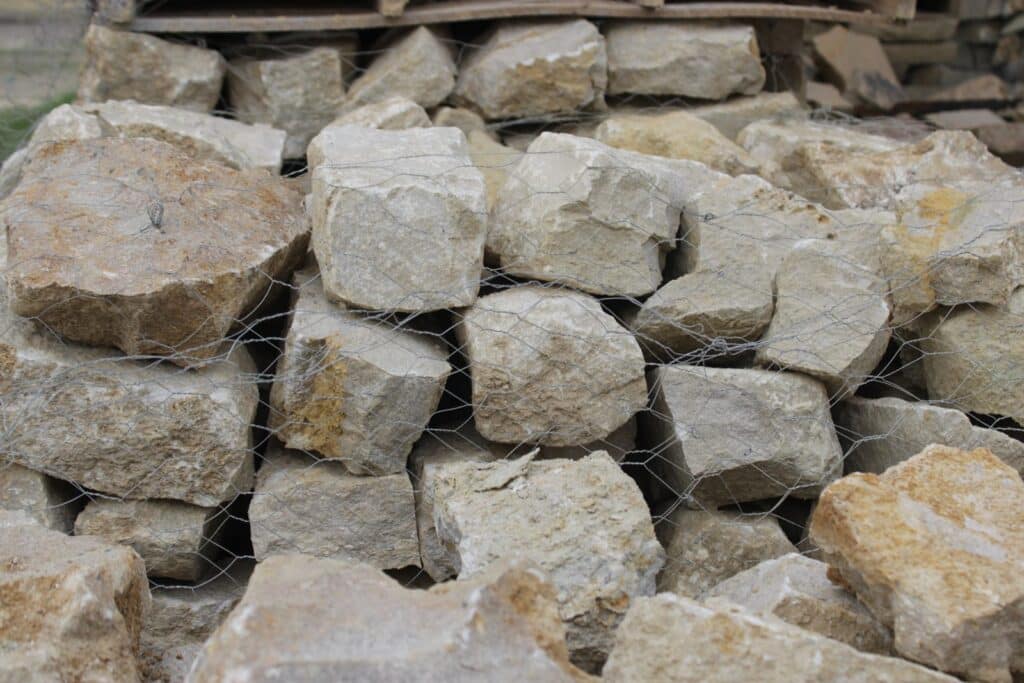
If you are planning a project with landscaping bricks around your McKinney home, the right landscape block choices depend on the job: holding back soil on a slope, edging a garden bed, or building a flat patio surface. JBS Express stocks a range of concrete and natural stone options that suit North Texas conditions, and we deliver them on flatbed or dump trucks to residential sites in McKinney and nearby towns.
Quick answer: Landscaping bricks and landscape block are manufactured or quarried units made for outdoor structural use. They interlock or stack to create retaining walls, straight or curved borders, and paver-style patios. They differ from standard building bricks because they resist freeze-thaw cycles, handle soil pressure, and often include textured faces that blend with local landscapes. They are not intended for driveways that see daily vehicle traffic or for indoor applications.
Confirm the exact dimensions and finish before ordering. JBS Express McKinney carries heavier aggregates and base materials that pair with brick and block projects, including road base for foundations and decomposed granite for jointing. Call the yard to check current stock if your plan calls for a specific color or size.
Table of Contents
- What Landscaping Bricks and Landscape Block Are
- Using Landscape Block for Retaining Walls
- Landscape Bricks for Borders and Edging
- Landscaping Bricks for Patios and Walkways
- Planning for McKinney Soil and Weather
- Measuring Quantity and Ordering
- Materials to Compare at the Yard
- Pickup and Delivery Options
- FAQs
What Landscaping Bricks and Landscape Block Are
Landscaping bricks are solid or hollow units formed from concrete, clay, or natural stone. Landscape block usually refers to the larger, often interlocking concrete pieces designed for walls. Both come in straight, tapered, and corner shapes so walls can follow the contours of a yard. The units are made to stack without mortar in many cases, though some installations use construction adhesive between courses for added stability.
Common finishes include split-face, tumbled, and smooth. Split-face shows a rough texture that looks like quarried stone. Tumbled edges give a softer, aged appearance that suits older McKinney neighborhoods. Colors range from natural gray and tan to deeper earth tones that match local limestone outcroppings. The material does not break down in soil contact the way wood timbers do, and it requires little maintenance once installed.
Using Landscape Block for Retaining Walls
Retaining walls solve slope issues common on McKinney lots that back up to creeks or have been graded for new construction. Landscape block walls work well when the height stays under four feet; taller walls need engineering and permits. Start with a compacted base of crushed limestone or road base, then set the first course level. Each additional course steps back slightly to create a batter that resists soil pressure.
Drainage is critical. Place perforated pipe behind the wall at the lowest course and backfill with gravel so water does not build up and push the blocks forward. Geogrid fabric can be added between courses on taller sections for extra reinforcement. Homeowners often finish the top course with a cap block that sheds water and gives a finished look.
Landscape Bricks for Borders and Edging
Borders keep mulch in place and create clean lines between lawn and beds. A single course of landscaping brick set on edge or flat provides a mowing strip that lets you run the mower wheel along the brick without damaging grass. For a taller border, stack two or three courses and secure them with landscape adhesive. Curved borders require blocks made with angled sides so the line flows without large gaps.
Install the border on a shallow bed of sand or screenings so it stays level through seasonal wet and dry cycles. This method also makes future adjustments easier if tree roots shift the grade.
Landscaping Bricks for Patios and Walkways
Patios built with landscaping bricks or paver-style blocks create usable outdoor space for seating and dining. Begin with an excavation deep enough for a compacted base plus sand setting bed. Slope the finished surface one-eighth inch per foot away from the house so rain drains properly. Edge restraints made from the same block or a plastic paver edge keep the perimeter from spreading over time.
Joint sand or polymeric sand swept into the gaps locks the units together and resists weed growth. In McKinney summers, lighter-colored bricks stay cooler underfoot than dark ones. Consider running a simple pattern such as running bond or herringbone to add visual interest without complicated cuts.
Planning for McKinney Soil and Weather
McKinney clay soils expand when wet and shrink when dry, which can move walls and patios if the base is not prepared correctly. Always excavate to firm subgrade and use a plate compactor in lifts. Summer heat can cause rapid drying of mortar or adhesive, so schedule work for early morning or shaded areas when possible. Winter freezes are infrequent but still require good drainage behind retaining walls to prevent heaving.
Check local setback rules before starting a wall near property lines. Many McKinney subdivisions have HOA guidelines on material color and maximum wall height that affect brick and block selection.
Measuring Quantity and Ordering
Measure the length and average height of each wall or border, then multiply to get square feet. Most landscape block covers about one square foot per unit when stacked; check the specific product data for exact coverage. Add five to ten percent extra for cuts and breakage. For patios, calculate square footage and add the same buffer. Use the Landscape Material Calculator on our site to convert those numbers into cubic yards of base material needed.
Materials to Compare at the Yard
At the yard you can compare concrete landscape block with natural limestone veneer, flagstone, and larger retaining wall systems. Concrete block is consistent in size and color, while natural stone varies and may require more cutting. Road base and limestone screenings provide the stable foundation layer under any of these choices. If your project needs lighter weight material for rooftop planters or upper decks, ask about expanded shale or lightweight aggregates that can be mixed with the brick installation.
Pickup and Delivery Options
McKinney customers can load their own trucks or trailers at the yard. For larger orders, flatbed or Dump Truck Deliveries bring the material directly to the job site. Drivers can often place the load close to the work area when access allows. Schedule delivery a day or two before you plan to start so the material is on hand when the crew arrives.
FAQs
Do landscaping bricks require a concrete footing?
Most landscape block walls under four feet use a compacted gravel base rather than a poured concrete footing. Taller walls or those supporting heavy loads usually need an engineered footing and permit.
Can I install landscape block on a slope?
Yes. The blocks are designed to step back with the slope. Proper base preparation and drainage behind the wall remain the most important steps regardless of the grade.
How long does a landscaping brick patio last?
With correct base compaction and joint sand, a well-built patio lasts decades with only occasional re-sanding of joints. The units themselves do not degrade from weather exposure.
Will landscaping bricks fade in Texas sun?
Quality concrete and stone units are manufactured with UV-stable pigments. Some light surface fading can occur over many years, but the color remains consistent enough for most residential projects.
Do I need permits for a retaining wall in McKinney?
Walls over a certain height typically require permits. Check with the City of McKinney or your HOA before ordering materials so you can adjust the design if needed.
Ready to move forward with your landscaping bricks project? Request a Quote or call 469-972-8818 to speak with the yard about current stock and delivery to your McKinney address. We also serve McKinney and surrounding communities with the materials and service needed to complete the job right.