
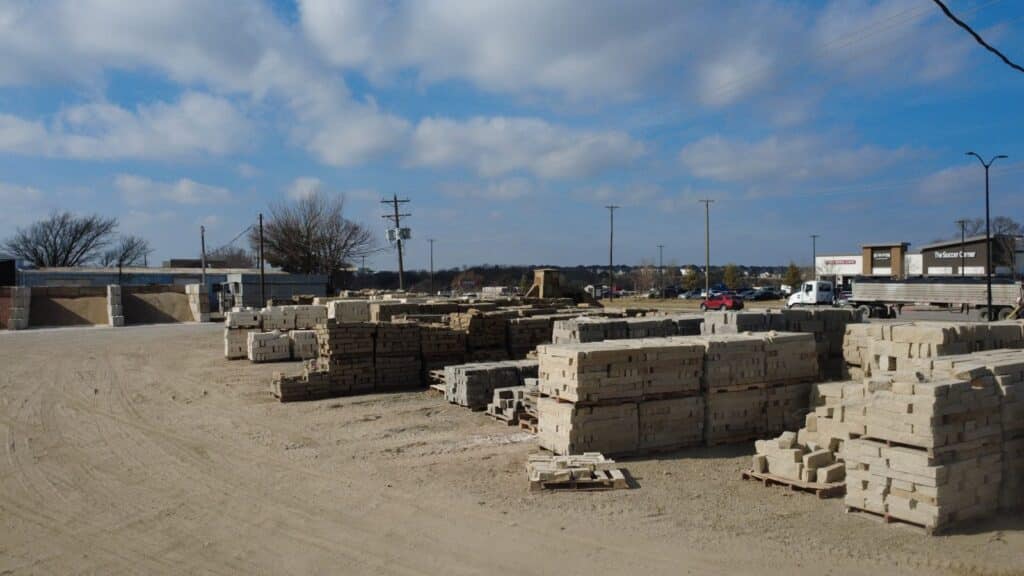
Choosing the right landscape edging stone keeps garden beds neat and prevents mulch from spilling onto lawns in McKinney yards. Homeowners often pair it with landscape block to create low borders that handle the local clay soil and seasonal rain.
Quick answer: Landscape edging stone includes flat or cut natural pieces such as limestone or sandstone that form a visible edge. Landscape block refers to stacked concrete or stone units that create a small wall. Both options define beds cleanly, reduce weeding, and work with the area’s freeze-thaw cycles. Neither replaces a full retaining wall or driveway base.
Confirm the material on hand before ordering. JBS Express McKinney carries a range of aggregates and soils that complement edging jobs, including options listed in the Catalog. Call the yard to check current stock if your project needs a specific size or color.
Table of Contents
- What Landscape Edging Stone Is
- Landscape Block Choices for McKinney Beds
- Natural Stone Edging Options
- Comparing Stone and Block
- Planning the Project in McKinney
- Installation Basics
- Maintenance Through the Seasons
- Pickup and Delivery in the Area
- FAQs
What Landscape Edging Stone Is
Landscape edging stone consists of durable rock pieces placed along the perimeter of flower beds or vegetable gardens. The material creates a clear line that stops grass from creeping inward and keeps mulch or soil contained during heavy rain common in Collin County. Pieces are usually set on a compacted base of screenings or gravel so they stay level over time. Unlike plastic or metal strips, stone adds natural texture that matches local limestone outcrops and blends with McKinney’s mix of ranch-style and newer homes.
The stone itself does not break down quickly, so one installation can last many seasons. Homeowners select it when they want a low-maintenance border that also improves drainage around plant roots. Because the pieces sit partially above grade, they also serve as a mowing strip that protects mower blades from hitting soil.
Landscape Block Choices for McKinney Beds
Landscape block comes in straight or curved units that stack without mortar for most garden heights under twelve inches. The blocks interlock or sit flush, giving a uniform look that suits formal beds along driveways or patios. In McKinney’s expanding neighborhoods, many residents use these blocks to terrace slight slopes created during new construction. The material resists the area’s occasional hard freezes because the units allow minor movement without cracking.
Choose blocks when the bed edge needs to hold back several inches of soil or when a straight, repeatable pattern is preferred. Blocks also accept lighting or irrigation lines run behind them, which keeps wires hidden yet accessible. Because they are manufactured in consistent sizes, planning quantities is straightforward once the linear feet of edging are measured.
Natural Stone Edging Options
Natural stone edging offers irregular or tumbled pieces that fit together like a puzzle. Limestone and sandstone are common choices because they weather to soft tones that complement Texas landscapes. The varied shapes allow curves around trees or existing hardscape without cutting. When placed on edge or flat, the stone creates a rustic border that softens the transition between lawn and bed.
Thicker pieces can double as a seat wall for small beds near patios. Because natural stone is heavier than most blocks, it stays in place even on slight grades common in older McKinney subdivisions. Homeowners often combine it with river rock or decomposed granite inside the bed for a cohesive look.
Comparing Stone and Block
Landscape edging stone provides organic variation and pairs well with native plants, while landscape block delivers clean lines and easier stacking on slopes. Stone generally requires more site preparation to level each piece, whereas blocks sit on a simple gravel trench. Both materials drain well, which matters during spring storms. If the goal is a formal appearance near the front walk, block may be the better fit. For a cottage garden look along the side yard, natural stone often wins.
Planning the Project in McKinney
Measure the total linear feet of bed edge and add ten percent for cuts or curves. Sketch the layout on paper or mark it with spray paint to visualize how the edging will interact with sprinklers and trees. Check local HOA rules in neighborhoods such as Stonebridge or Craig Ranch before starting, because some require specific heights or colors. Consider tying the edging into existing hardscape so the finished look appears intentional rather than added later.
Installation Basics
Begin by digging a shallow trench slightly wider than the material. Compact the base with screenings or crushed limestone to create a firm bed. Set each piece or block level and backfill behind it with soil or gravel. For blocks, follow the manufacturer’s running-bond pattern to increase stability. Water the trench lightly after placement to settle the base material without washing soil onto the lawn.
Maintenance Through the Seasons
Once installed, landscape edging stone and block need only occasional weeding along the joint lines and a quick rinse after pollen season. In winter, avoid piling salted snow directly against the material because de-icers can stain lighter stones. Re-level any pieces that shift after heavy rain by adding a small amount of base material underneath. Mulch refresh each spring keeps the beds looking sharp without disturbing the edging.
Pickup and Delivery in the Area
McKinney residents can pick up smaller quantities or arrange Dump Truck Deliveries for larger loads. Flatbed service works well when the material needs to reach backyards with limited access. Service extends to nearby communities including Frisco, Plano, Allen, and Prosper. Review the Services page for current delivery zones and scheduling.
FAQs
How deep should the trench be for landscape edging stone?
Dig the trench four to six inches deep depending on the height of the stone or block so roughly half the material sits above grade for a clean reveal.
Can landscape block be used on a slope?
Yes, stepped courses of landscape block follow gentle slopes while maintaining level runs between steps. Terracing more than twelve inches usually requires engineering review.
Does natural stone edging need a fabric barrier underneath?
A geotextile fabric beneath the base material helps prevent soil migration while still allowing water to drain, which is useful in McKinney’s clay-heavy soils.
How often should edging be re-leveled after installation?
Most installations stay level for several years. Check joints each spring and add base material only where frost heave or heavy traffic has caused movement.
Is landscape edging stone suitable next to pools or patios?
Both stone and block work well beside pools when set on a compacted base. Choose non-slip surfaces and ensure the edging sits slightly lower than the pool deck to avoid trip hazards.
Ready to define your beds with durable landscape edging stone or landscape block? Contact JBS Express McKinney today to discuss options and schedule delivery. Call 469-972-8818 or visit the Request a Quote page for local service in McKinney and surrounding areas.