
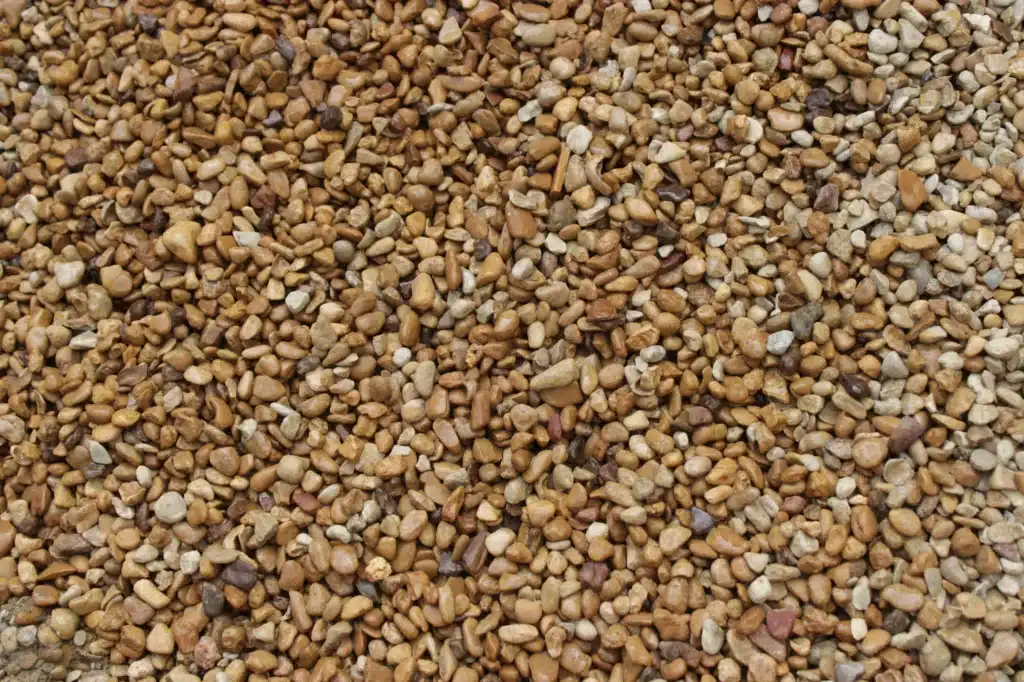
How do you use pea gravel for walkways so the path stays neat and easy to maintain?
Quick answer: Pea gravel is small, rounded stone that drains well and feels softer underfoot than sharp crushed rock. For a walkway, edge both sides, set a practical depth for continuous coverage, and accept that rounded stone will shift a little as people walk. Measure length, width, and depth, then order bulk material for pickup or dump truck delivery.
A pea gravel walkway can be a practical DIY path choice for side yards, garden routes, and soft secondary walks. JBS Express McKinney stocks Native Pea Gravel 3/8″ and Alabama Sunset Gold (pea gravel size). See the pile in daylight before you order the load.
Table of Contents
- What Pea Gravel Is
- When a Pea Gravel Walkway Is a Good Fit
- When Another Surface Is Better
- How to Build the Path Step by Step
- Depth, Quantity, and Ordering
- Stepping Stones and Path Design
- Product Options at JBS Express
- Pickup and Dump Truck Delivery
- FAQs
What Pea Gravel Is
Pea gravel is small, naturally rounded stone, often about pea size. The smooth shape is why people like pea gravel for paths and garden walks. Water moves through the voids easily. The same rounded shape keeps the surface looser than angular gravel or compacted decomposed granite.
At the yard, confirm the pile’s size and color. “Pea” describes the size family. Color and blend can still vary by product.
When a Pea Gravel Walkway Is a Good Fit
A pea gravel walkway works well when you want:
- A soft, informal walking surface
- Fast surface drainage after rain
- A natural look beside beds and turf
- A path that is easier to refresh than poured concrete
It also works as pea gravel for paths to sheds, gates, and garden loops where chairs and carts are not the main use.
Be honest about feel: rounded stone moves underfoot. Wheelbarrows and rolling bins take more effort than on a compacted DG path. That is normal for this material, not a product failure.
When Another Surface Is Better
Skip pea gravel as the main walking lane when:
- You need a firmer, more compact path for frequent carts or bikes
- Outdoor furniture must sit level every day
- Daily vehicle traffic is the job (that is a driveway material decision)
- The site floods and needs engineered drainage first
If you are deciding between loose pea gravel and compacted decomposed granite, use our pea gravel vs decomposed granite guide once. This post stays on planning pea gravel for walkways.
How to Build the Path Step by Step
How to make a pea gravel walkway starts with layout, not with dumping stone on grass.
1. Mark the route
Paint or stake the path. Keep curves gentle enough for a wheelbarrow if you will use one.
2. Excavate and grade
Remove grass and soft topsoil. Slope the path slightly so water does not sit against the house. A pea gravel path is a surface finish, not a full drainage system.
3. Edge both sides
Steel, plastic, stone, or concrete edging keeps gravel out of the lawn. Skipping edges is the fastest way a neat path turns into scattered rock.
4. Decide on fabric and base
Many homeowners use landscape fabric under decorative gravel paths. Fabric can help with weeds and keep stone cleaner, but it is not required on every site. Soft clay or heavy traffic may also need a compacted aggregate base under the pea layer. Match the prep to how hard you’ll use the path.
5. Place and rake the gravel
Spread the stone evenly. Rake for consistent depth. Check edges again after the first rain and top off thin spots.
6. Plan maintenance
Leaves settle into the voids. A light blower setting and occasional raking keep the path looking intentional.
Depth, Quantity, and Ordering
Depth depends on stone size, traffic, and how even the subgrade is. Aim for continuous coverage after settling so soil does not flash through. Many residential decorative paths land around a couple of inches of pea gravel once settled, but that is a starting point, not a universal spec. Confirm what fits your stone size and site. Ordered depth and settled depth can differ slightly after the path is walked in and raked.
Formula: length (ft) × width (ft) × depth (ft), then divide by 27 for cubic yards.
That gives you cubic yards. Tonnage depends on moisture and density, so confirm conversion with JBS if you order by weight.
Use the material calculator with your measurements, or call (469) 972-8818 with length, width, and target depth. Allow some extra material for uneven excavation and edge touch-ups. JBS can help you settle on an amount based on the path plan.
Stepping Stones and Path Design
A pea gravel walkway with stepping stones can reduce shift underfoot and add a clearer walking line. Set the stones on a stable base first, then fill around them with pea gravel so the tops sit proud enough to step on cleanly.
Design tips:
- Keep joint widths consistent so the path does not look accidental
- Use edging so gravel does not spill into turf
- Match stone color to the house and nearby beds in daylight
Product Options at JBS Express
For walkway-size material, start with:
- Native Pea Gravel 3/8″ for a classic natural blend
- Alabama Sunset Gold (pea gravel size) when you want a warmer gold tone in a pea-size product
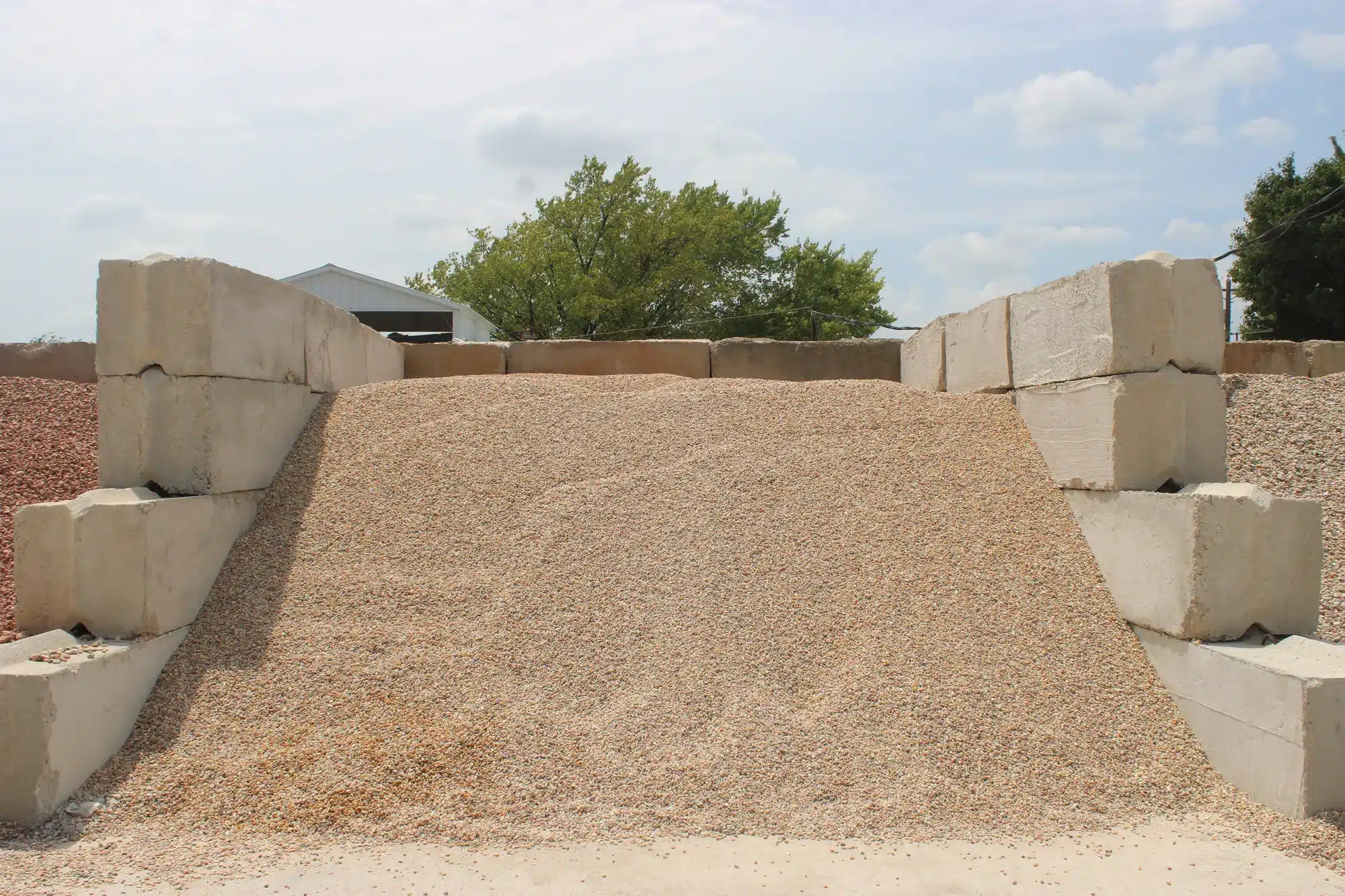
Compare piles in daylight because indoor lighting can change how the stone color appears. If you also need landscape-size Alabama Sunset for beds, that is a different product size. Keep walkway stone in the pea-size line unless your plan clearly calls for larger rock.
Pickup and Dump Truck Delivery
Small refresh loads may fit a pickup if you tarp the bed and respect weight limits. Full path jobs are denser than they look.
For larger paths, JBS Express delivers loose bulk gravel by dump truck. Share these details when you request a quote:
- Address and city
- Approximate cubic yards or path length, width, and depth
- Gate width, overhead lines, and dump spot
- Whether the load can sit on the driveway, side yard, or street front
Dump trucks carry loose pea gravel. Flatbeds are for slabs, pavers, and other hardscape pieces that should not be dumped.
Quotes depend on distance and load size. Yard hours are Monday through Friday, 7:00 AM to 5:00 PM, and Saturday, 7:00 AM to 2:00 PM. Sunday is closed.
FAQs
Will pea gravel shift underfoot?
Yes, some movement is normal because the stone is rounded. Edging, proper depth, and optional stepping stones help the path stay neat.
How deep should a pea gravel path be?
Deep enough for continuous coverage after settling. Exact depth varies with stone size, traffic, and subgrade. Confirm with your measurements at the yard.
Do I need landscape fabric?
Fabric can help on many decorative paths, but it is not automatic for every site. Match the underlayment to soil and weed pressure.
Is pea gravel good for driveways?
Rounded pea gravel is a weak choice as the only daily driving surface because it migrates. Use it for walkways and beds unless your driveway plan specifically calls for a different gravel system.
Can I pick up pea gravel in McKinney?
Yes. JBS Express McKinney stocks Native Pea Gravel 3/8″ and Alabama Sunset pea-size options for pickup or dump truck delivery. Call (469) 972-8818 to confirm what is on the ground.
Pea gravel or decomposed granite for a walking path?
Pea gravel stays looser. DG can compact into a firmer trail feel. Compare both in the pea gravel vs decomposed granite guide if you are still deciding.
Get Materials from JBS Express McKinney
If you want pea gravel for walkways that matches your path plan, start at the yard where you can see size and color before you order. JBS Express McKinney supplies Native Pea Gravel 3/8″ and Alabama Sunset pea-size gravel for homeowners and crews.
Bring path measurements and a rough sketch. We will help you estimate cubic yards, confirm stock, and set up dump truck delivery if a pickup will not cover the load.
Call (469) 972-8818, contact the yard, or request a quote so your path materials are ready before you dig.