
As homeowners and landscape professionals look for ways to minimize environmental impact, outdoor design choices are shifting toward long-term conservation. While plants and water systems are common focuses of eco-friendly design, the foundational materials you choose matter just as much.
Evaluating the sustainability of landscaping stones reveals that natural rock is one of the most eco-conscious materials available for modern hardscaping and landscaping. When sourced responsibly and utilized effectively, stone design plays a vital role in reducing water waste, preventing soil erosion, and eliminating the need for synthetic manufacturing.
Is Natural Stone Sustainable for Landscaping?
Yes, natural stone is highly sustainable because it requires no synthetic manufacturing chemicals, boasts an exceptionally long lifespan, and can be completely recycled. Utilizing local stone minimizes transportation emissions, while strategic stone placement reduces residential outdoor water consumption.
Why Is Natural Stone a Sustainable Landscaping Choice?
To truly understand the sustainability of landscaping stones, it helps to compare them with manufactured alternatives such as poured concrete, composite decking, or synthetic brick pavers. Natural stone is a product of geological processes, meaning its creation requires zero industrial energy or chemical binders.
An Infinite Lifespan and Low Lifecycle Cost
Unlike wood, which rots, or concrete, which cracks and degrades over a few decades, natural stone lasts indefinitely. It withstands extreme weather variations, intense UV exposure, and heavy foot traffic without losing structural integrity. Because it rarely needs replacement, its long-term environmental footprint and lifecycle cost are incredibly low.
Complete Recyclability and Minimal Waste
If a stone patio, retaining wall, or gravel pathway is ever dismantled, the material does not end up in a landfill. Flagstone can be lifted and relaid, river rocks redistributed, and large boulders repurposed into new structural designs. This infinite cradle-to-grave circularity is a core pillar of green building practices.
Environmental Benefits of Eco-Friendly Stone Design
Integrating raw rock into your property does more than just add visual texture; it actively supports local ecosystems. Creative stone design solves several environmental challenges common to residential and commercial properties.
+————————————————————————+
| STONE DESIGN ECO-BENEFITS |
+————————————+———————————–+
| Permeable Pathways & Rivers | Natural Ground Cover & Mulch |
| – Recharges local groundwater | – Locks moisture into soil |
| – Filters out pollutants naturally | – Eliminates plastic weed liners |
| – Reduces urban stormwater runoff | – Will not decompose or rot |
+————————————+———————————–+
Stormwater Management and Groundwater Recharge
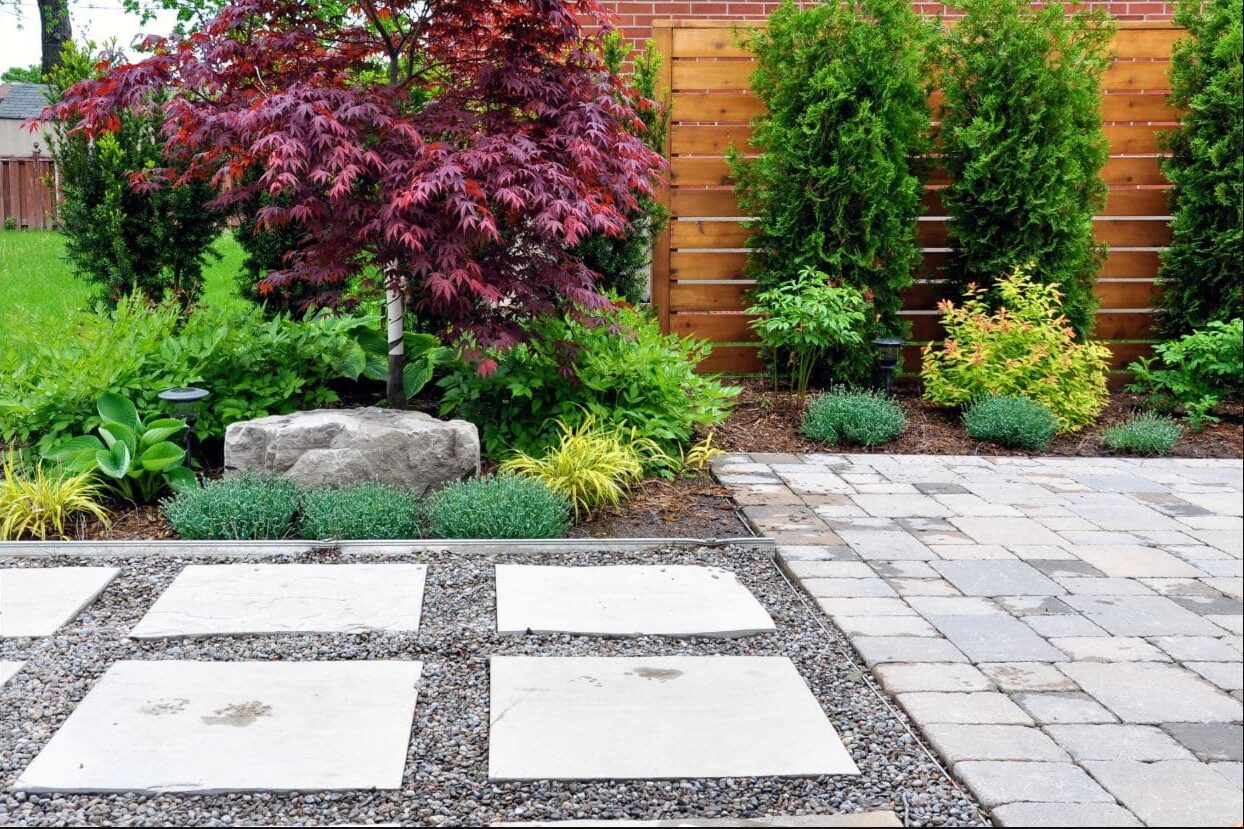
Hard, non-porous surfaces like concrete divert rainwater directly into municipal storm drains, carrying surface pollutants into local waterways. Utilizing loose river rock, gravel, or unsealed flagstone patios allows rainwater to seep naturally back into the ground. This natural filtration recharges aquifers and mitigates local erosion.
Weed Suppression Without Chemical Intervention
Layering smaller landscaping stones, such as pea gravel or crushed limestone, creates a durable barrier that suppresses weed growth. Unlike organic mulch, which decomposes annually and requires frequent replacement, stone ground cover provides a permanent solution that minimizes the need for chemical weed killers or synthetic plastic weed fabrics.
How to Maximize the Sustainability of Landscaping Stones
Not all stone usage is equal from an environmental perspective. To ensure your outdoor project is as green as possible, implement these three industry best practices.
1. Prioritize Locally Sourced Stone
The primary environmental cost of natural stone comes from transportation. Shipping heavy boulders or bulk gravel across the country burns significant amounts of fossil fuel. Sourcing regional varieties such as native Texas limestone, local river gravel, or regional sandstone drastically lowers your project’s carbon footprint while ensuring the materials match the local geographic aesthetic.
2. Implement Xeriscaping and Water-Wise Design
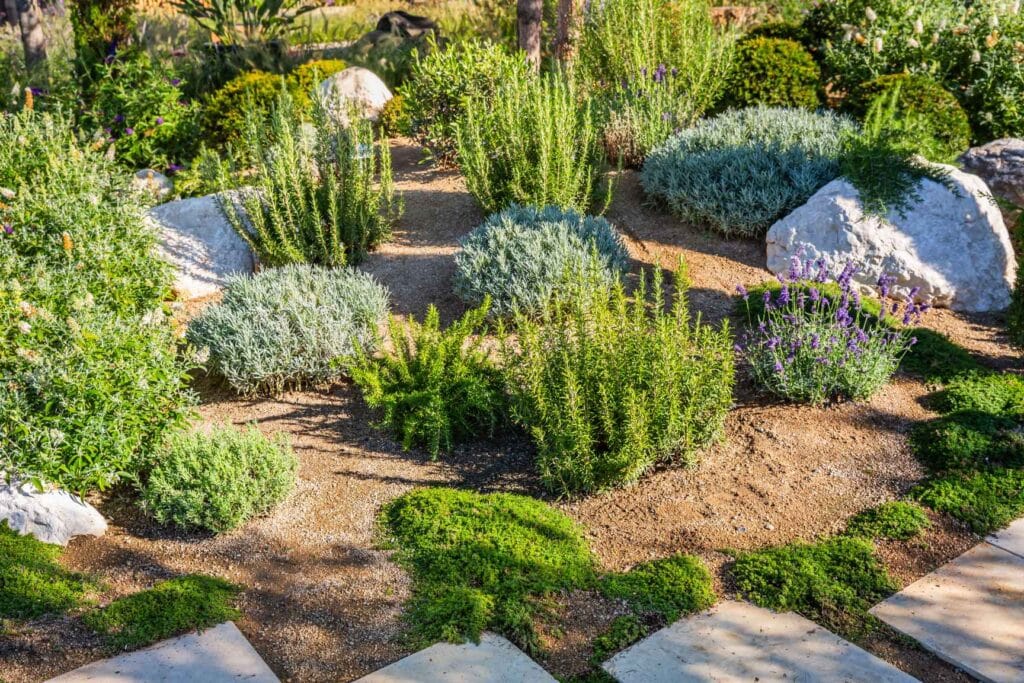
Swapping water-thirsty turf grass for a curated layout of drought-tolerant plants, boulders, and gravel beds is known as xeriscaping. Strategic stone placement acts as a natural insulator for the soil beneath, reducing evaporation rates and cutting outdoor water consumption by more than 50%.
3. Avoid Harsh Chemical Sealants
While sealants can alter the surface shine of hardscaping, many traditional glossy coatings contain high levels of volatile organic compounds (VOCs). To maintain true environmental sustainability, leave your stones unsealed to weather naturally, or opt for breathable, eco-friendly, water-based penetrative sealants if structural protection is necessary.
Key Takeaways
- Zero Chemical Manufacturing: Natural stone requires no industrial chemical processing, making it fundamentally cleaner than concrete or synthetic alternatives.
- Reduces Water Demands: Utilizing stone in xeriscaping drastically reduces residential irrigation needs.
- Infinite Lifespan: Stone does not rot, warp, or decompose, yielding an unmatched lifecycle value that stays out of landfills.
- Enhances Drainage: Permeable stone designs allow rainwater to naturally filter back into local underground aquifers.
- Sourcing Locally is Vital: Buying regional stone varieties minimizes transportation emissions and maximizes eco-efficiency.
Frequently Asked Questions
Q: Is natural stone more sustainable than poured concrete for a patio?
A: Yes. Poured concrete requires cement production, which is a major contributor to global carbon emissions. Additionally, concrete creates an impermeable surface that disrupts natural drainage, whereas stone can be laid in a permeable pattern and lasts significantly longer.
Q: Does harvesting landscaping stone harm the environment?
A: Quarrying does impact the local landscape, which is why sustainable stone design relies on strictly regulated quarries that practice land reclamation. You can also optimize sustainability by choosing recycled stone, fieldstone, or river rocks harvested with minimal environmental disruption.
Q: Can landscaping stones completely replace wood mulch?
A: Yes. While wood mulch introduces organic matter to the soil, it decomposes every year and requires continuous transport, processing, and reapplication. Landscaping stones provide permanent weed suppression and moisture retention without needing replacement.
Q: How does local stone selection lower a project’s carbon footprint?
A: Because stone is exceptionally heavy, transporting it over long distances requires substantial fuel. Purchasing stone quarried in your region reduces transport emissions to a fraction of those associated with imported exotic stone.
Q: Will installing stone ground cover make my yard hotter?
A: Darker stones can absorb and radiate heat during peak summer sun. To mitigate this effect in warm climates, select light-colored stones like limestone, white river rocks, or light granites, which reflect sunlight and help keep the surrounding soil cool.
Q: Can I reuse old landscaping stones if I change my yard design?
A: Absolutely. This is one of stone’s greatest ecological benefits. You can wash, relocate, and repurpose gravel, flagstone, and boulders indefinitely across different areas of your property or pass them along to another project.
Elevate Your Property with Sustainable Stone Design
Creating an elegant, high-end landscape doesn’t mean you have to compromise on environmental responsibility. By choosing natural stone, you are investing in a timeless material that conserves water, supports natural drainage systems, and eliminates the need for repetitive, waste-producing replacements.
If you are ready to transform your outdoor space with durable, eco-conscious materials, the team at JBS Express is here to supply premium, regionally sourced stones tailored to your unique vision. From functional gravel pathways to breathtaking flagstone installations, we help you build outdoor spaces that respect the environment. Contact JBS Express Natural Stone & Landscape Material today to explore our selection and plan your next sustainable landscape project.