
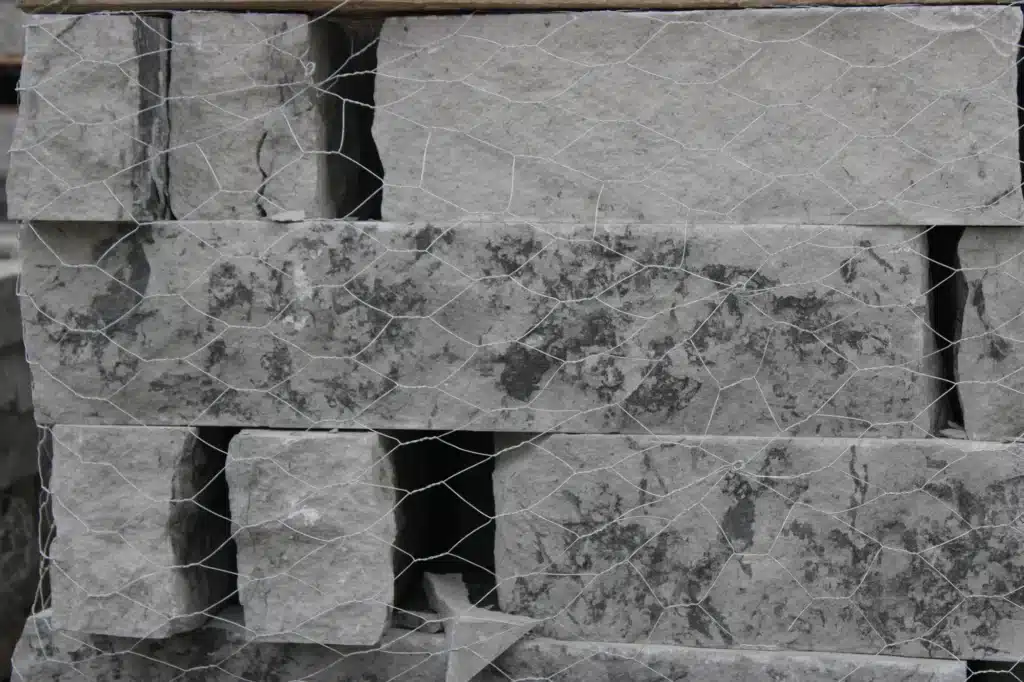
Choosing the right natural stone for retaining wall construction gives McKinney homeowners a durable way to manage slopes while creating functional stone landscape elements that blend with local yards and patios.
Quick answer: Limestone, sandstone, and granite blocks sized between six and twelve inches work well for most McKinney retaining walls. These materials provide the weight and interlocking strength needed on clay-heavy North Texas soils while offering natural color tones that match surrounding flagstone or gravel areas.
Visit the JBS Express yard in McKinney to examine current stock before ordering. Staff can help match stone type and size to your specific slope height and drainage needs.
Table of Contents
- Types of Natural Stone for Retaining Walls
- Soil and Slope Conditions in McKinney
- Practical Checklist for Planning Your Retaining Wall
- Installation Steps for Lasting Results
- Common Mistakes to Avoid
- Maintenance for Stone Landscape Walls
- Calculating Quantities for Your Project
- Pickup and Delivery Options
- FAQs
Types of Natural Stone for Retaining Walls
McKinney yards often feature clay soils that expand and contract with moisture changes. Limestone offers good drainage and a light color that reflects heat. Sandstone provides a warmer tone and splits easily for custom fits on curved walls. Granite delivers the highest compressive strength for taller structures over four feet.
Each type pairs with local stone landscape features such as gravel beds or flagstone paths. Homeowners frequently combine two sizes: larger base stones for stability and smaller cap stones for a finished top edge. Test samples on site to confirm the stone will not clash with existing mulch or river rock borders.
Soil and Slope Conditions in McKinney
North Texas clay requires proper base preparation before any natural stone for retaining wall project begins. Excavate to a depth that allows six inches of compacted crushed stone plus the first course of wall stone. Add a perforated drain pipe behind the wall to direct water away from the foundation and prevent hydrostatic pressure buildup during heavy rains.
Slopes steeper than two-to-one need engineering review. Shorter walls under three feet can often be built as dry-stacked structures, while taller walls benefit from mortar or geogrid reinforcement. Check local setback rules before starting work near property lines or easements.
Practical Checklist for Planning Your Retaining Wall
Start by walking the full length of the planned wall during a rain event to observe natural water flow patterns across your McKinney property. Note any low spots where water pools and mark those areas for extra drainage measures. Measure the total run and average height at multiple points so you can order the correct mix of stone sizes from the yard.
Next, verify utility locations by calling for locates at least two full business days ahead of excavation. Confirm that your chosen natural stone for retaining wall material will coordinate with other stone landscape elements already in place such as patios or gravel paths. Prepare a simple sketch showing the wall profile, base width, and backfill depth to share with delivery drivers when they arrive.
Finally, gather the right tools including a long level, rubber mallet, and landscape fabric before the stone arrives. Having everything staged reduces downtime once the material is on site and helps the project stay on schedule even when North Texas weather changes quickly.
Installation Steps for Lasting Results
Begin by marking the wall location with stakes and string. Dig a trench wide enough for the base stone plus six inches on each side. Compact the subgrade, then add and level the crushed stone base. Lay the first course of natural stone for retaining wall construction with each piece butted tightly and level front to back.
Backfill with gravel in six-inch lifts, compacting after each layer. Install drain pipe at the base and cover it with landscape fabric to keep soil out. Continue courses, staggering joints so no vertical seams align. Cap the wall with larger flat stones or poured concrete for a clean edge that sheds water.
Common Mistakes to Avoid
One frequent error is skipping the crushed stone base and placing the first course directly on native clay. This leads to uneven settling after the first heavy rain season in McKinney. Another common issue is failing to install or properly slope the drain pipe, which allows water to push against the wall face and cause stones to shift outward over time.
Homeowners sometimes choose stones that are too uniform in size, creating straight vertical joints that weaken the structure. Mixing larger and smaller pieces while staggering the seams improves stability. Finally, neglecting to compact each backfill layer in small lifts often results in voids that later cause the wall to lean or bulge.
Reviewing these points before you begin helps ensure the finished wall integrates smoothly with the rest of your stone landscape and holds up through repeated freeze-thaw cycles common in the area.
Maintenance for Stone Landscape Walls
Inspect walls each spring for shifting or loose stones caused by freeze-thaw cycles. Re-level any settled base material and replace individual stones as needed. Keep vegetation trimmed back from the top and face to reduce root pressure. A light power wash every two years removes pollen and dust without damaging the natural finish.
These steps keep the wall functional and attractive alongside other stone landscape elements such as patios or walkways. Regular checks also protect nearby plantings from soil erosion during storms.
Calculating Quantities for Your Project
Use the Landscape Material Calculator to estimate stone tonnage based on wall length, height, and thickness. Add ten percent extra for cuts and breakage. Measure the gravel base and backfill needs separately to avoid running short during installation.
Pickup and Delivery Options
McKinney customers can load their own trucks at the yard or schedule dump truck deliveries for larger orders. Flatbed service works well for palletized stone that must stay organized. Confirm delivery access and placement location when placing the order so drivers can position material close to the work area.
FAQs
How tall can a dry-stacked natural stone retaining wall be in McKinney?
Most dry-stacked walls stay under four feet without additional reinforcement. Taller structures require geogrid layers or mortar to meet local stability standards on clay soils.
Which natural stone for retaining wall projects drains best?
Limestone and sandstone allow water to pass through small gaps between stones. Avoid very dense granite unless the wall includes a robust drain system behind it.
Can I build a retaining wall myself or should I hire help?
Shorter walls under three feet are suitable for experienced DIYers with proper base preparation. Taller walls or those near structures benefit from professional installation to ensure long-term safety.
How often should I check drainage behind the wall?
Inspect the outlet of the drain pipe after major rain events. Clear any debris so water continues to flow away from the wall base and surrounding yard.
Does natural stone for retaining wall construction need sealing?
Most limestone and sandstone walls perform well without sealer. Apply a breathable masonry sealer only if you notice staining from irrigation water or heavy pollen buildup.
Ready to start your retaining wall project? Call (469) 972-8818 to speak with the JBS Express team or request a quote online. We serve homeowners throughout McKinney and nearby areas including McKinney, Frisco, and Plano.