
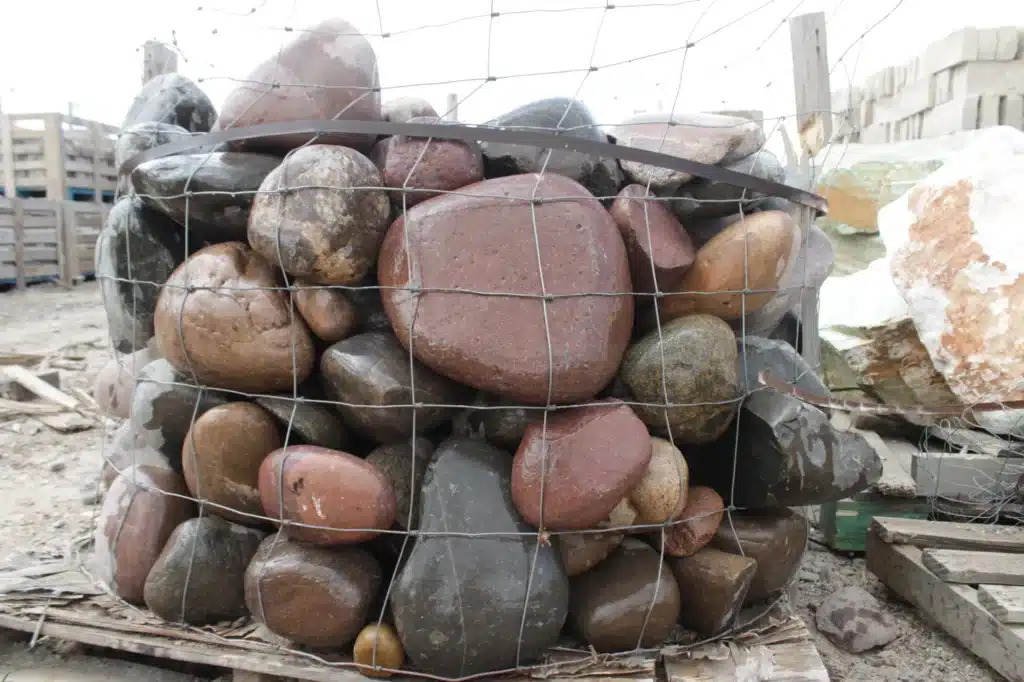
How do you plan dry creek bed landscaping so it moves water and still looks finished in a McKinney yard?
Quick answer: A dry creek bed is a shallow, stone-lined path that follows where water already wants to travel. Dig a gentle channel, protect the soil with fabric where it fits the job, then armor it with mid-size river rock and larger stone at drops. Aim for slope away from the house, clear edges, and enough depth so soil does not show after the first storm.
In McKinney and across Collin County, late-summer and fall storms can send heavy runoff across clay-heavy yards. Water collects near foundations, cuts ruts through turf, or leaves a muddy swale that never dries evenly. JBS Express Natural Stone & Landscape Material stocks the river rock, rip rap, and accent stone that finish the channel, and we help you estimate bulk loads for pickup or dump truck delivery.
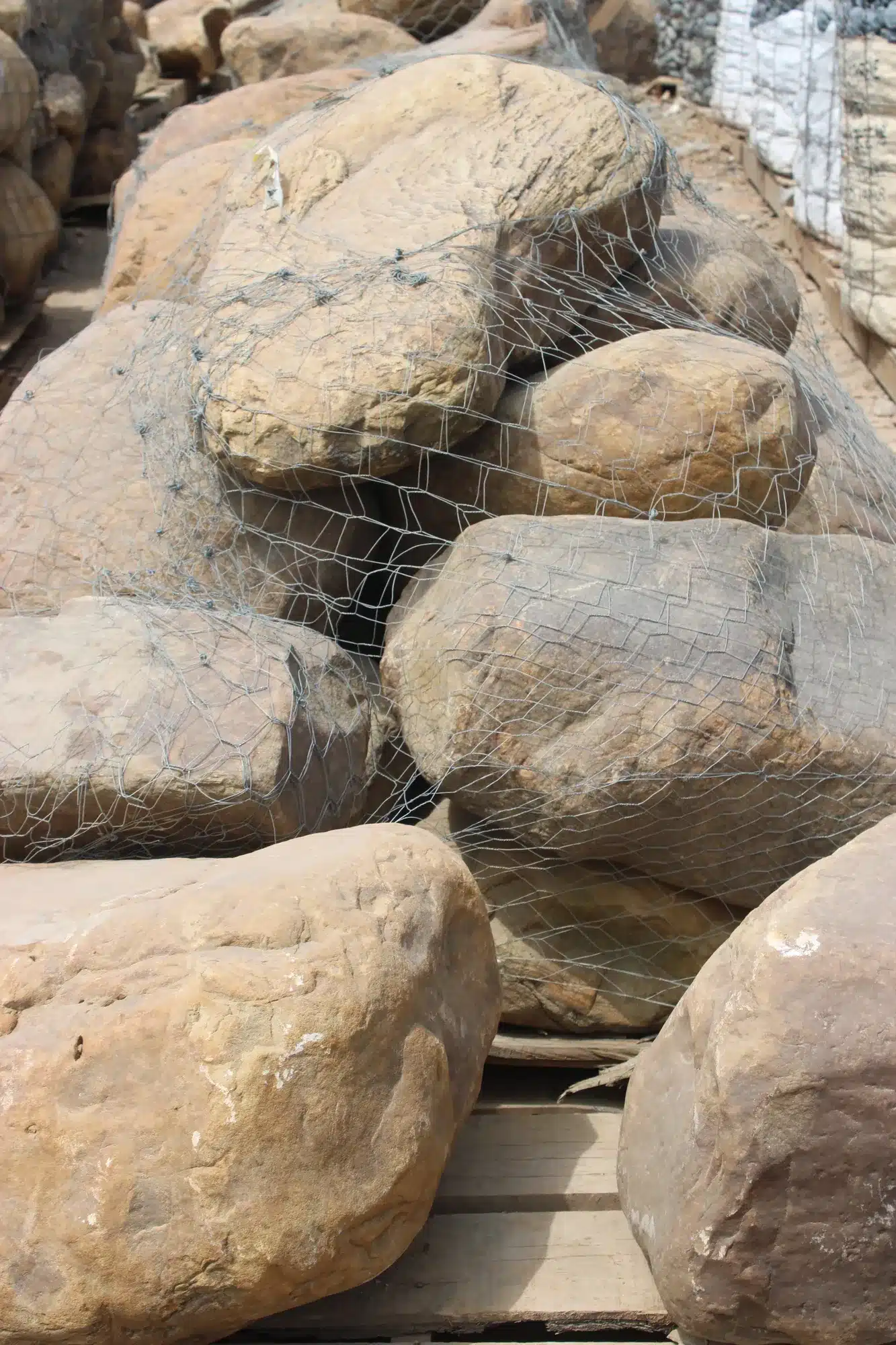
Table of Contents
- What Dry Creek Bed Landscaping Is
- Why Dry Creek Bed Landscaping Works in McKinney
- When a Dry Creek Bed Is Not Enough
- How to Build a Dry Creek Bed Step by Step
- Materials That Finish the Channel
- Dry Creek Bed Landscape Fabric Tips
- Front Yard Dry Creek Bed Landscaping
- How Much Stone Do You Need
- Pickup and Dump Truck Delivery
- FAQs
What Dry Creek Bed Landscaping Is
Dry creek bed landscaping is a designed rock channel that sits dry most days and carries water during storms. It is not a pond. It is not a full French drain with pipe (unless your contractor adds one underneath). It is a finished surface that protects soil, slows erosion, and makes runoff look intentional.
Think of three jobs at once:
- Move water away from low spots and foundations.
- Protect soil so clay does not wash into the street.
- Finish the look so the channel reads as landscaping, not leftover rock.
Landscaping a dry creek bed works best when you follow real flow paths. Watch where water runs after a heavy rain. That line is usually your creek path. A decorative rock strip that never sees water is fine for style, but it will not fix flooding.
Why Dry Creek Bed Landscaping Works in McKinney
North Texas clay swells when wet and cracks when dry. After a long hot stretch, fall storms can dump water onto hard ground that will not soak in fast. That is why many local yards get temporary sheets of water across the lawn or along the driveway edge.
Dry creek bed landscaping helps because:
- A consistent slope gives water a defined path toward a suitable outlet.
- Rounded river rock covers bare soil and helps surface water move along the channel instead of cutting a muddy rut.
- Larger stone at bends and downspout drops slows scour.
- A defined edge keeps rock out of the turf and keeps the lawn mower honest.
A dry creek manages surface runoff. It does not automatically solve groundwater issues, foundation drainage problems, or a yard with no safe outlet. This is a materials and layout job. It is not a substitute for engineered drainage on severe sites. If water enters the house, call a drainage professional. For common yard runoff and downspout splash, a well-built dry creek is often the right first upgrade before cooler weather arrives.
When a Dry Creek Bed Is Not Enough
A dry creek is designed for surface runoff. It may not solve:
- Water entering a foundation or crawl space
- Groundwater or seepage problems
- Severe standing water with nowhere to drain
- Major grade problems that need regrading
- Runoff coming from neighboring properties that needs a shared or engineered plan
- Steep erosion that requires structural stabilization
If any of those apply, bring in a drainage professional first. Then use rock to finish or armor the solution they specify.
How to Build a Dry Creek Bed Step by Step
How to build a dry creek bed starts with observation, not with buying the first pile of rock you see.
- Map the water path. Walk the yard after rain, or use a small hose flow at the downspout to see the natural path. Mark the line with flags or paint. Note low spots, fence openings, and where water exits to the street or alley.
- Dig a shallow channel. Most residential creeks are a gentle trench, not a deep ditch. Dig so the bottom slopes away from the foundation. Keep side slopes soft so stone sits without collapsing. Leave the channel wide enough that rock does not look like a skinny scar across the lawn.
- Prep and edge. Remove grass, roots, and soft fill. Compact the base lightly. Install edging if the creek meets turf so rock does not migrate into the grass after every storm.
- Decide on fabric. Many homeowners use landscape fabric under rock to keep mud from pumping up. Fabric is not always required on every site. See the fabric tips below before you staple an entire roll.
- Place stone from large to small. Set larger pieces at the start of flow, at turns, and at drops. Fill the run with mid-size river rock. Mix sizes on purpose so the creek looks natural, not like one bag dumped in a line.
- Check depth and flow. Use enough rock so fabric or soil does not wash through after settling. Do a small flow test to confirm water follows the intended path without pooling against the house. Fix spots where water jumps the bank.
- Finish the edges. Blend planting beds or mulch outside the rock line so the creek looks planned. Keep irrigation heads and mower paths clear.
Materials That Finish the Channel
JBS Express stocks the bulk stone most dry creeks need. Keep each product in its role so you do not overbuy the wrong pile.
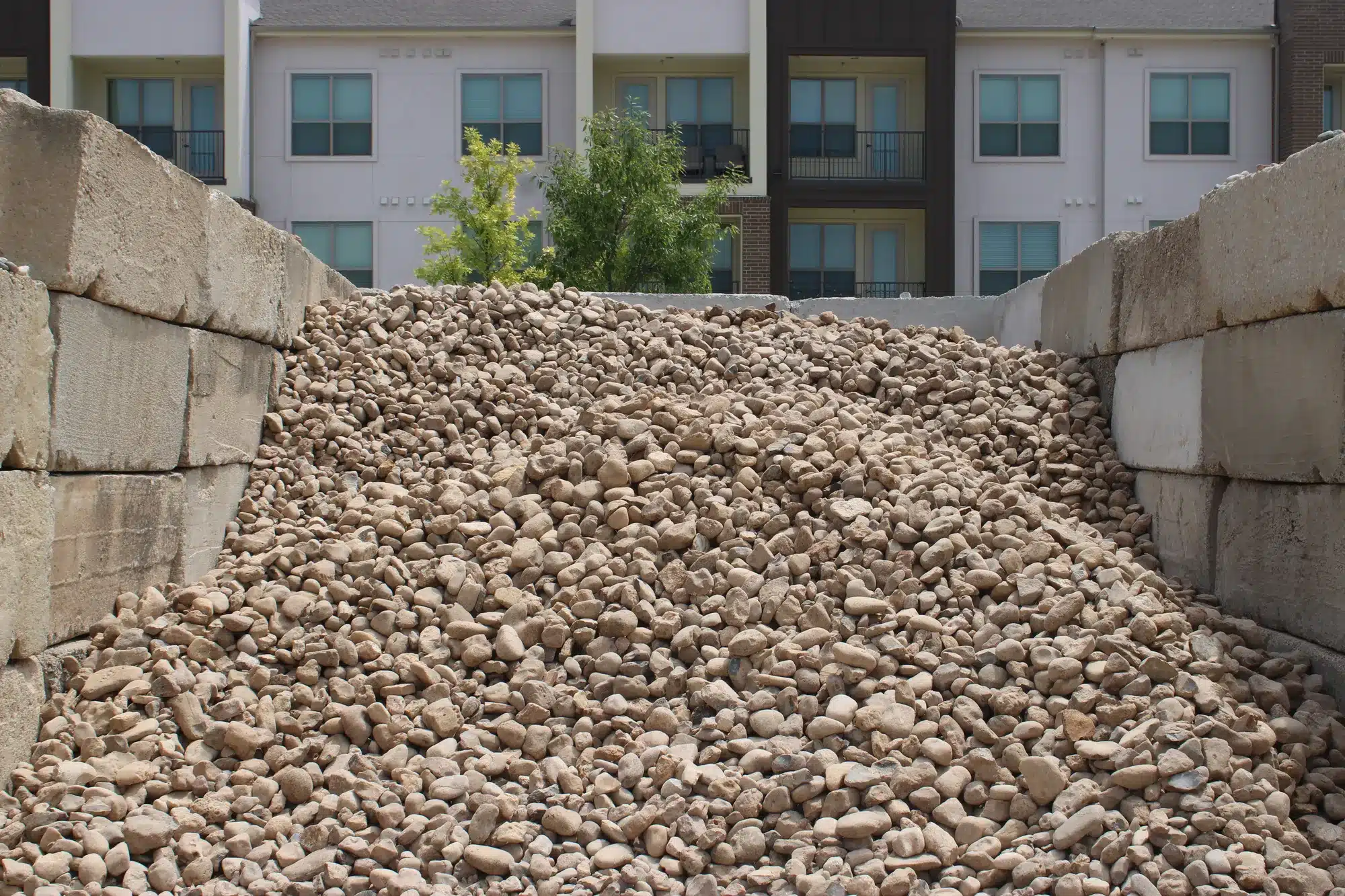
River rock for the main run
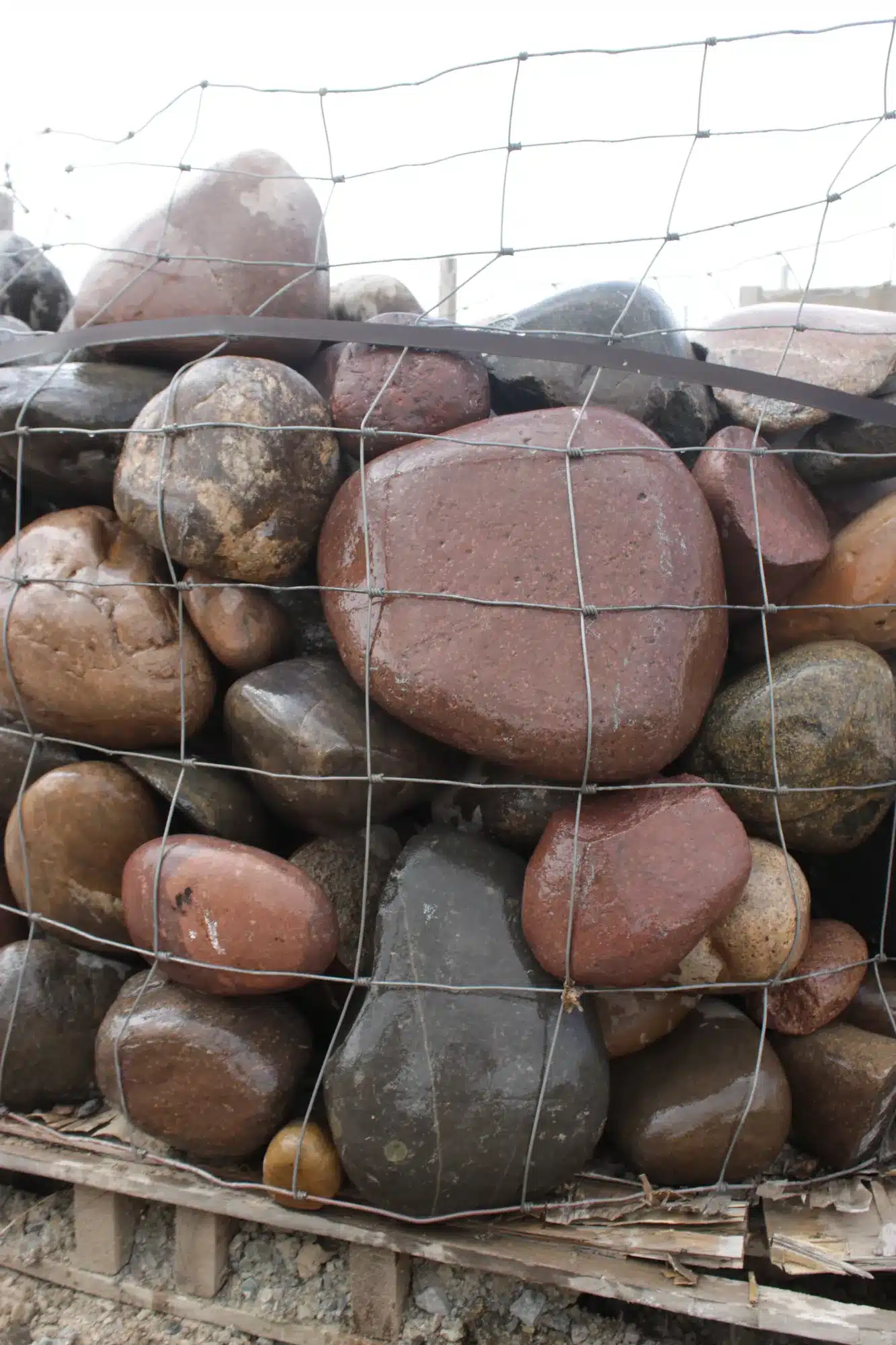
River rocks are the everyday finish for residential channels. Mid-size rounded stone covers the trench and still lets water move. At the yard, compare the actual rock sizes side by side before you order so you can see how the stone will look relative to your channel width. If you are choosing between smaller river rock and larger bull rock for drainage look and scale, our bull rock vs river rock guide covers size matching without turning this post into a product duel.
Rip rap for armor and erosion control
Rip rap is angular armor rock. Use it where flow concentrates, on steeper slopes, or where rounded stone would wash thin. For rip rap landscaping and rip rap erosion control accents inside a dry creek, place it at drops and outlets, then return to river rock along the quieter run. Homeowners often underestimate how much larger stone they need at downspout drops. Bring a photo of that spot when you visit so staff can point you to the right pile.
Boulders as accents, not fill
A few landscape boulders can mark a bend or the mouth of the creek. They are feature stone, not bulk fill. Do not line the whole channel with showpiece boulders. That blocks flow and fights mowing. For placement tips, see our landscape boulders guide.
Dry Creek Bed Landscape Fabric Tips
Dry creek bed landscape fabric is common under rock, and for good reason. Fabric can:
- Keep mud from mixing into clean stone
- Slow weeds that start from bare soil
- Help rock stay cleaner after storms
Use good judgment:
- Overlap seams and pin edges so fabric does not curl into the channel.
- Cut carefully around plants you want to keep.
- Skip fabric where you need soil contact for new plantings along the bank.
- Remember fabric is a helper, not a drainage system. Slope and stone still do the water work.
If the creek is steep or engineered, follow your contractor’s spec for underlayment. Decorative fabric choices are not the same as structural geotextile on a commercial swale. For a deeper look at fabric under rounded stone, see Do You Need Landscape Fabric Under River Rock?
Front Yard Dry Creek Bed Landscaping
Front yard dry creek bed landscaping has to satisfy two audiences: stormwater and the street view.
Keep these front-yard rules:
- Tie the creek to a real source, such as a downspout or driveway runoff line.
- Keep the curve gentle. Sharp S-curves look staged and can trap debris.
- Match rock color to the house trim and existing beds so the channel does not fight the facade.
- Leave room for mowers and sidewalk clearance.
- Check HOA rules if your neighborhood reviews hardscape changes.
A front-yard creek that never connects to water can still look good, but neighbors will read it as decoration. A creek that follows real flow reads as smart design.
How Much Stone Do You Need
Order by area and depth, then add a buffer.
Formula: length (ft) × average width (ft) × depth (ft), then divide by 27 for cubic yards.
That gives you cubic yards. Your final tonnage depends on the stone’s size and density, so confirm the conversion with JBS before ordering by weight.
Starting depths:
- Main run with mid-size river rock: enough stone for continuous coverage after settling; many residential runs land around 3 to 4 inches, but depth varies with stone size, slope, and flow
- High-flow drops: deeper, with larger stone so the base stays covered
- Thin decorative accents: not enough for a working creek
Consider adding about 10% for uneven excavation, settling, and edge touch-ups. Larger stone leaves bigger voids, so the same depth can show more soil. Use the material calculator or call (469) 972-8818 with length, width, and depth.
Pickup and Dump Truck Delivery
Small touch-up loads may fit a pickup or trailer if you tarp the bed and respect weight limits. Full channel fills are denser than they look.
For larger jobs, JBS Express delivers loose bulk rock by dump truck. Share these details when you request a quote:
- Address and city
- Approximate cubic yards or square footage and depth
- Gate width, overhead lines, and dump spot
- Whether the load can sit on driveway, side yard, or street front
Dump trucks carry bulk river rock and rip rap. Flatbeds are for slabs, pavers, and many boulder placements that should not be dumped. Describe the mix so dispatch matches the right truck.
We deliver from our McKinney yard to nearby cities. Quotes depend on distance and load size.
Yard hours: Monday through Friday, 7:00 AM to 5:00 PM. Saturday, 7:00 AM to 2:00 PM. Sunday closed.
FAQs
Is a Dry Creek Bed the Same as a French Drain?
No. A French drain usually includes perforated pipe and a designed gravel envelope. A dry creek is a surface rock channel. Some projects combine both. Ask your contractor if pipe is required for your site.
Will a Dry Creek Fix Standing Water Overnight?
It helps move surface water when slope and outlet are right. Flat yards with no exit may still need grading or a deeper drainage plan.
What Size River Rock Works Best?
Mid-size stone suits most residential runs. Larger stone belongs at drops and bends. Compare piles at the yard so diameter matches the channel width.
Do I Need Fabric Under Every Dry Creek?
Not always. Fabric helps on many flat residential beds. Steep or engineered sites may need different underlayment. Match the product to the job.
Can I Build a Dry Creek Myself?
Many homeowners can dig a shallow channel and place stone. Call for help on deep trenches near utilities, heavy boulder placement, or sites that flood the foundation.
Where Can I Buy Materials for Dry Creek Bed Landscaping Near McKinney?
JBS Express Natural Stone & Landscape Material stocks river rock, rip rap, and boulders for pickup or dump truck delivery. Call (469) 972-8818 to confirm what is on the ground before you drive over.
Get Dry Creek Bed Landscaping Materials from JBS Express Natural Stone & Landscape Material
If you want dry creek bed landscaping that moves water and still looks finished, start with the right rock and a clear path for runoff. JBS Express Natural Stone & Landscape Material supplies river rock, rip rap, and accent stone for homeowners and crews.
Bring photos of the wet spots and rough measurements. We will help you match stone size to the channel, confirm stock in the river rocks and rip rap lines, and set up delivery if a pickup will not cover the load.
Visit the shop this week, call (469) 972-8818, or request a quote so your dry creek is ready before the next round of North Texas rain.
Beach pebbles and river rock solve different jobs. For fine bed and joint fills, read how much Mexican beach pebbles you need; use river rock for larger dry-creek channels.