
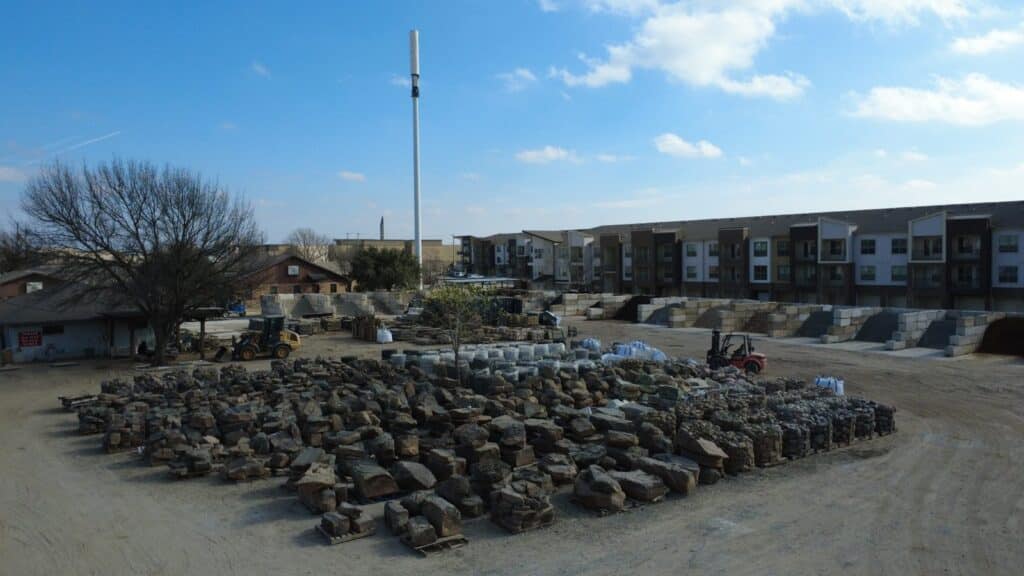
Drainage rocks help McKinney homeowners manage heavy rains and standing water that collect in low spots, along foundations, and in planting beds. Whether you call it drain rock, all-purpose stone, or drainage rock, the right aggregate lets water move quickly away from structures instead of pooling on clay-heavy North Texas soil.
Quick answer: Drainage rocks are clean, angular or rounded stone sized from three-eighths inch up to two inches. The open voids between pieces let water flow through instead of sitting on top of the ground. Homeowners place them in French drains, behind retaining walls, under downspout extensions, and as a base layer in beds that stay soggy after storms.
McKinney receives intense spring and fall rains that can drop several inches in a single afternoon. When soil stays saturated, water presses against foundations and encourages root rot in shrubs. Drainage rocks give that water a fast path downward and outward before it reaches living areas or crawl spaces.
Table of Contents
- What Drainage Rocks Are
- Common Water Issues in McKinney Yards
- Where Drainage Rock Works Best
- How to Plan and Install a Drainage Layer
- Calculating Quantity and Ordering
- Materials to Compare at the Yard
- Pickup and Delivery Options
- FAQs
What Drainage Rocks Are
Drainage rocks start as natural limestone or river rock that has been screened and washed so fines and dust are removed. Without fines, the stones stay loose and water can travel between them. The angular edges of crushed varieties lock together better on slopes, while rounded river rock looks more natural in visible beds. Both types stay stable under mulch or soil and do not break down over time the way organic materials do.
Size matters for performance. Three-quarter-inch to one-and-a-half-inch stone works for most French drains and dry wells. Smaller three-eighths-inch material fits narrow trenches or planter bottoms where larger pieces would be too coarse. Two-inch stone handles high-volume areas such as the outlet end of a downspout extension.
Common Water Issues in McKinney Yards
McKinney sits on heavy clay that drains slowly. After a thunderstorm, water often sits in the middle of the lawn or against the back of the house for hours. Downspouts that empty directly onto grade create small rivers that erode soil and splash mud onto siding. Retaining walls built without a gravel backfill collect water behind them, pushing the wall forward over time. These patterns repeat across neighborhoods from west McKinney to the newer sections near Highway 380.
Where Drainage Rock Works Best
Use drainage rock behind retaining walls to relieve hydrostatic pressure. Place a six-inch layer along the back of the wall, then wrap a perforated pipe in filter fabric and cover it with more stone before backfilling with soil. In planting beds that stay wet, a four-inch drainage layer at the bottom improves aeration for roots. French drains running from low spots to a daylight outlet or dry well move water that otherwise collects near patios and driveways. Downspout extensions filled with stone hide the pipe while still carrying water several feet from the foundation.
How to Plan and Install a Drainage Layer
Start by watching where water flows during the next rain. Mark low spots and note the direction water naturally wants to travel. Dig a trench at least twelve inches deep and wide enough for the volume you expect. Slope the bottom one-eighth inch per foot toward the outlet. Line the trench with filter fabric, add four to six inches of drainage rock, lay the pipe if using one, then cover the pipe with more stone until the trench is nearly full. Fold the fabric over the top and finish with soil or mulch. Keep the outlet clear so water can exit freely.
Calculating Quantity and Ordering
Measure the length, width, and depth of each area in feet. Multiply those numbers to get cubic feet, then divide by twenty-seven to convert to cubic yards. Add ten percent extra for settling and waste. The Material Calculator on the site helps convert these measurements quickly. Order enough to complete the job in one delivery so the stone matches in color and size.
Materials to Compare at the Yard
Drainage rock works where water movement is the priority. Road base or crushed limestone compacts tightly and suits driveways or paths instead. Topsoil and compost improve planting areas but hold moisture. If you need a mix for both drainage and growing, ask about blending drainage rock with a small amount of compost at the surface. The yard team can show current piles so you choose the right product for each part of the project.
Pickup and Delivery Options
Load your own truck or trailer at the yard for small jobs. For larger quantities, flatbed or dump truck deliveries reach McKinney addresses and nearby communities. Schedule delivery after you have the trench ready so the material goes straight into place. Drivers can often place the load close to the work area when access allows.
FAQs
Can I mix drainage rock with soil?
Mixing works only at the surface layer. Below that, keep the stone clean so voids stay open for water flow.
How deep should a French drain be?
Most residential French drains sit twelve to eighteen inches deep. Deeper trenches handle larger volumes but require more stone and fabric.
Will drainage rock stop all standing water?
It moves surface and subsurface water away from problem spots. Severe grading issues or poor outlet locations may still need additional work such as re-sloping the yard.
Is drainage rock safe next to foundations?
Yes, when placed with proper slope and fabric. The stone itself does not hold water against concrete.
Can I reuse drainage rock from an old project?
Clean, undamaged stone can be reused. Remove soil and roots first so the voids remain open.
Ready to improve drainage around your McKinney home? Call 469-972-8818 or visit the Request a Quote page. The team at JBS Express can help you select the right drainage rock and arrange delivery to your address in McKinney or nearby areas such as McKinney, Frisco, or Plano.